The Unprinted Menu: Why the Griddle Teaches Chef's-Choice Better Than the Sushi Bar
Photo: Shazaalmadina, CC BY-SA 3.0, via Wikimedia Commons
The Word That Misleads
In the United States, the word omakase still arrives with a默认 assumption attached: a narrow wooden counter, a slab of chilled fish, a chef who places each piece before you with the solemnity of a jeweler. That image is not wrong. It is simply incomplete. Chef's-choice dining is a principle, not a protein. It describes a relationship in which the guest surrenders the ordering decision and the chef accepts responsibility for the arc of the meal. The teppan counter has been practicing that principle for decades, often without using the word.
This matters now, in 2026, because American diners are more curious about omakase than ever and more hesitant about raw fish than the restaurant industry sometimes admits. The teppan counter offers a bridge. It preserves the essential contract of chef-led dining while replacing the chill of the sushi bar with the radiant heat of an iron griddle. For anyone who has wanted to understand what omakase feels like without beginning at the deep end of a fish case, the griddle is an unusually clear teacher.
What the Griddle Changes About Trust
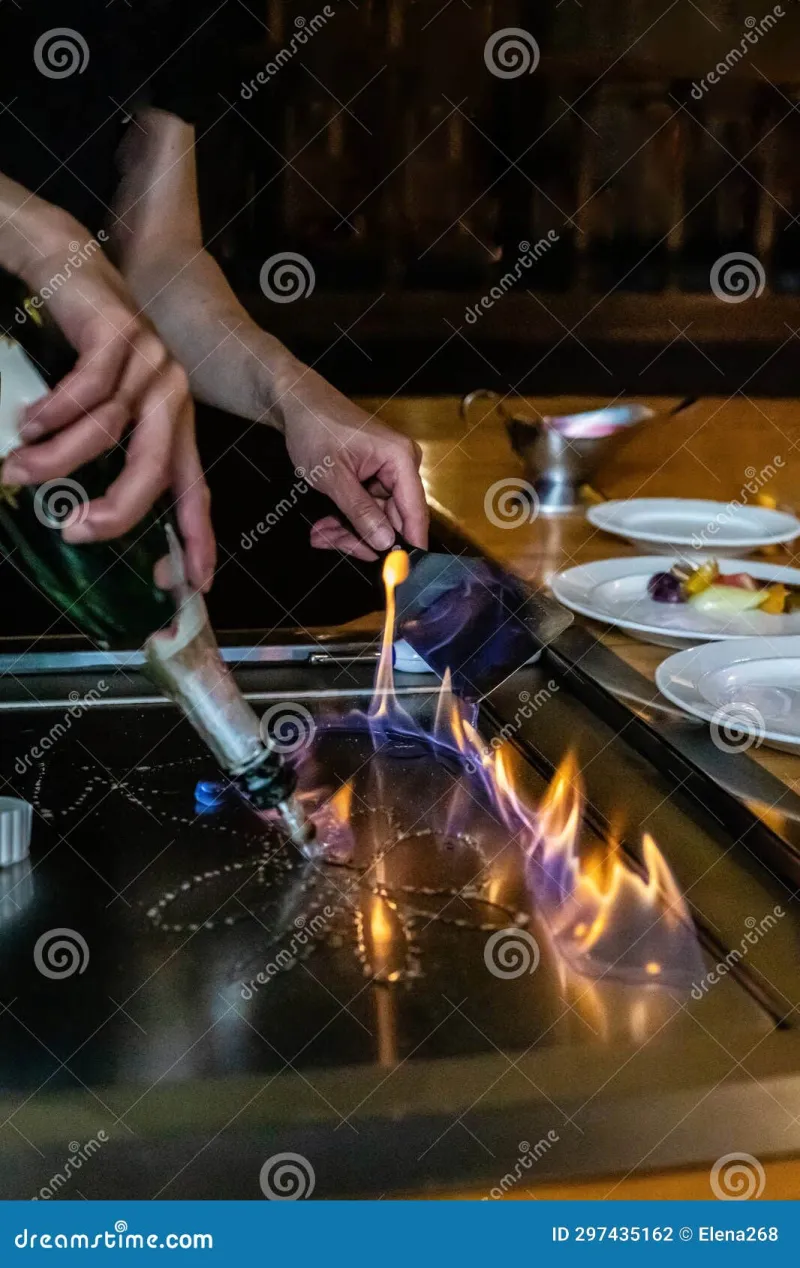
At a sushi omakase, trust is built through restraint. The chef's knife moves little; the rice is warm but the room is cool; the guest receives each course as a small, precise gift. At a teppan omakase, trust is built through choreography. The chef works in front of you, not across a narrow board. Ingredients arrive in visible form—whole vegetables, trimmed steaks, live shellfish—and are transformed on a surface you can see from edge to edge. The guest does not have to imagine the kitchen. The kitchen is the table.
That transparency changes the psychology of chef's-choice dining. A first-timer at a sushi counter may wonder whether the chef has registered a dislike of mackerel, a fear of texture, a quiet preference for lean over fatty. At the teppan counter, those signals are easier to send and easier to receive. The chef can look at a guest's pace, notice how quickly a course is finished, and adjust the next sequence without a word. The griddle is a stage, but it is also a feedback loop.
A Sequence You Can See
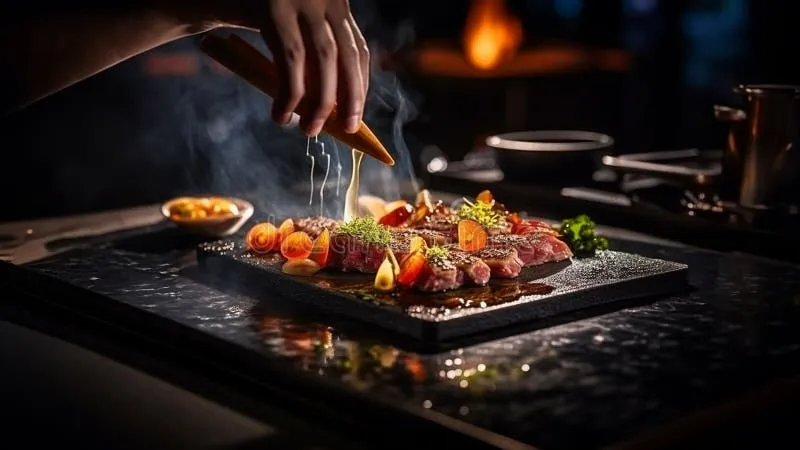
The structure of a teppan omakase is legible in a way that sushi omakase sometimes is not. A typical progression moves from delicate to robust: a small opening course, perhaps a clean seafood preparation or a seasonal vegetable seared with restraint; a middle passage of shellfish or lighter proteins; a principal course of beef, poultry, or a plant-forward centerpiece; then rice, pickles, and a final gesture that closes the meal. The order is not arbitrary. It follows the same logic as any serious tasting menu—acidity to richness, lightness to depth—but the guest can watch the logic unfold on the iron.
That visibility is an educational gift. Diners who have never experienced omakase often worry that they will not know what is happening, that they will commit some small faux pas, that the meal will be a test rather than a pleasure. At the teppan counter, the sequence is spatial as well as temporal. You see the next ingredient before it is cooked. You see the chef's hands decide. You see the plate being composed. The mystery of chef's-choice dining does not disappear, but it becomes a mystery of judgment rather than a mystery of information.
How Chefs Signal Value Without a Menu
One of the quiet challenges of omakase is communication. When there is no printed menu, the guest must infer value from the chef's choices, the pacing, the ingredients, and the care of the service. Teppanyaki chefs have developed a vocabulary for this. They may name a prefecture or a farm without turning the meal into a lecture. They may mention that a vegetable is at its peak for only a few weeks. They may place a cut of beef on the griddle and let the marbling speak for itself. The signal is rarely a sales pitch. It is a form of narration.
That narration matters because omakase is not only about eating well. It is about understanding why a meal is worth its price. At the teppan counter, the chef can show the work. A guest who watches a whole fish being broken down, a lobster being split, a mushroom being seared on the flat of the iron has a different relationship to the final course than a guest who receives a finished plate. The value is not merely in the ingredient. It is in the visible labor and the visible timing.
The First-Timer's Advantage
For hesitant first-timers, the teppan omakase has a practical advantage: it is social without being performative. The counter encourages conversation, but it does not require it. A guest can watch, ask a question, or simply eat. The chef can engage or remain focused. There is no obligation to demonstrate sophistication. This is a rare quality in fine dining, where the unspoken rules can sometimes feel like a second menu.
The format also accommodates dietary restrictions more gracefully than many guests expect. Because the chef is working with visible ingredients and a flexible sequence, adjustments can be made without dismantling the entire meal. A guest who does not eat shellfish can be guided toward a different middle course. A guest who prefers vegetables can be given a more substantial plant-forward passage. The chef's-choice model is not rigid. It is responsive.
The Case for Starting Here
None of this is an argument against sushi omakase. The sushi counter remains one of the great expressions of chef-led dining, and its discipline is its own reward. But the American diner who wants to understand omakase as a principle—trust, timing, seasonality, and the quiet authority of the chef—could do worse than to begin at the griddle. The iron is hot, the sequence is visible, and the chef is close enough to read the room. In a restaurant culture that often treats chef's-choice dining as an advanced course, the teppan counter offers something rarer: an introduction that is also a destination.