Seared Celery Root and the New Iron: How Plant-Forward Teppanyaki Earned Its Place at the Counter
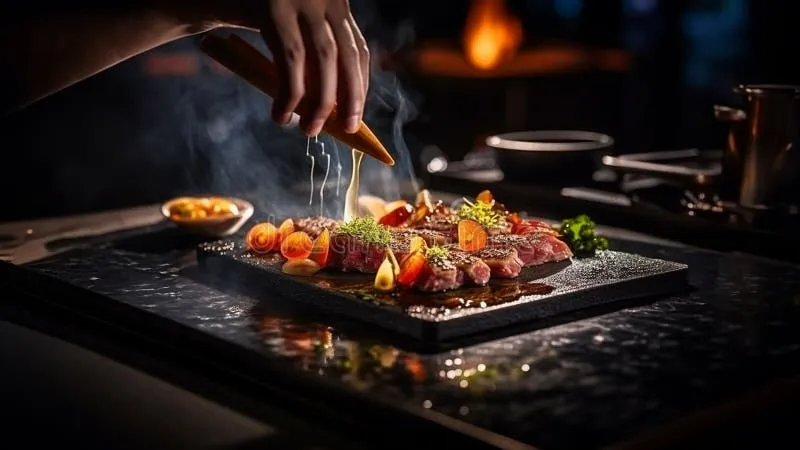
Photo: chef searing vegetables on teppanyaki griddle iron plate fine dining, via thumbs.dreamstime.com
The teppanyaki counter has always been a theater of fat. A ribbon of oil, a slab of beef, the hiss that tells you dinner is underway. So when a chef in Midtown Manhattan lays a pale disc of celery root onto a screaming-hot iron plate and does nothing but wait, the regulars lean in. Something is different. Nothing is burning. Everything is changing.
The Griddle Was Never the Problem
Skeptics of vegetable-led omakase tend to blame the format: an iron griddle, they argue, is a machine for searing protein, and produce simply cannot pay the toll. Working chefs tell a different story. The teppan, they say, is fundamentally a tool for controlling moisture and caramelization — and vegetables, with their sugars and dense cell structure, respond to that control more dramatically than any ribeye ever did.
Consider what happens to a wedge of kabocha squash at 220 degrees Celsius. The exterior darkens into a lacquered crust while the interior steams in its own flesh, concentrating sweetness the way a long braise would, in a fraction of the time. A shiitake cap pressed to the iron releases a burst of guanylate — one of the core umami compounds — that pairs with the glutamates in a brushed kelp reduction to produce a depth of savoriness that needs no animal fat to register.
Kelp Butter and the New Fat Philosophy
The pivotal ingredient in this movement is deceptively modest: a kombu-infused butter, clarified and re-emulsified, that carries the oceanic glutamates of kelp into every sear. Where traditional teppan kitchens baste in beef tallow or wagyu trimmings, the plant-forward counter reaches for this kelp butter the way a line cook reaches for salt — automatically, constantly.
Chefs in Los Angeles have pushed the technique further, blending the kelp butter with toasted rice oil for high-heat stability, then finishing delicate produce — snap peas, fava greens, thin-shaved watermelon radish — off the heat so the aromatics survive the plate. The result is a dish that tastes less like a substitute and more like a translation: the same grammar of fat, salt, smoke, and iron, spoken in a different vocabulary.
A Course-by-Course Argument
A typical vegetable teppan omakase now unfolding at American counters might run like this:
- First movement: A single spear of white asparagus, seared lengthwise, dressed in kelp butter and yuzu zest.
- Second: King trumpet mushrooms scored and grilled crosswise to mimic the striation of abalone, glazed with a reduced shiitake broth.
- Third: Celery root, slow-seared in a covered dome until it collapses, then sliced like foie gras and served with pickled mustard seed.
- Close: A fried rice of burnt scallion oil, heirloom grain, and charred leek ash — the dish that silences the doubters.
That last course matters. Fried rice is the ritual centerpiece of the traditional teppan finale, and its plant-based reinterpretation — built on allium char and toasted grain rather than pork fat — is the moment most converts describe as the turning point of the meal.
The Price Question
Can vegetables justify fine-dining tariffs? The economics are less lopsided than they appear. Heirloom produce from small farms in the Hudson Valley or along the Central Coast often costs more per pound than commodity beef, and the labor per course is comparable: a single carrot, turned and trimmed by hand, takes as long as a portion of striploin. Diners, meanwhile, increasingly arrive at the counter expecting provenance, seasonality, and a story — all of which a vegetable menu tells more naturally than a protein menu ever could.
The holdouts remain, and their objection is honest: they came for the fire and the fat, the primal satisfaction of the iron. What the new chefs understand is that the iron delivers both, whether the raw material is a ribeye or a root. The griddle has never cared what you put on it. It only asks that you know what you're doing.
Where This Goes Next
The likely trajectory mirrors what happened with sushi a generation ago: a period of skepticism, a handful of definitive restaurants, and then quiet assimilation into the mainstream of American omakase. Already, some counters offer a parallel vegetable menu by advance request; others have made it the default on certain nights. The most interesting kitchens treat the shift not as a limitation but as a return — back to the seasonality, restraint, and attention that Japanese cooking prized long before the first onion volcano was ever built.
The iron, it turns out, was always ready. The question was whether we were.