Reading the Bottles: A Gluten-Free Field Guide to the Teppan Counter
Photo: Shazaalmadina, CC BY-SA 3.0, via Wikimedia Commons
It is worth beginning with the uncomfortable sentence: a teppanyaki counter is a difficult room for a guest with celiac disease. Not hostile, not careless — difficult. The format is built on shared steel, shared utensils, and a sequence of sauces that in most kitchens begin with soy sauce, which in its conventional form begins with wheat.
What follows is a practical guide rather than a promise. It is written for the diner who wants a good evening and an honest understanding of the risk, and for the host who is booking on someone else's behalf.
The Griddle Is Rarely the Enemy
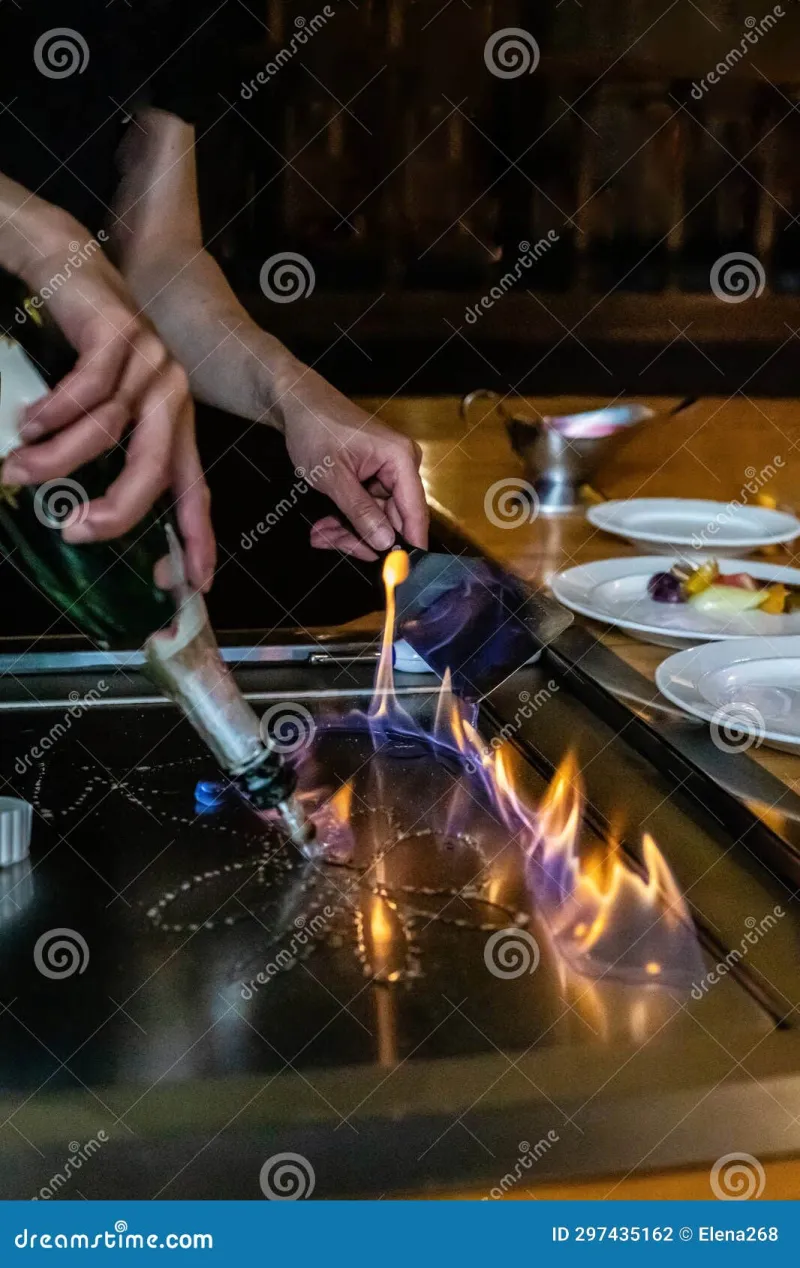
Flat steel is easy to clean. A hot griddle, scraped and re-oiled, is more forgiving than a basket fryer or a pot of shared pasta water. Most cross-contact at a teppan counter does not come from the surface itself. It comes from what was cooked on it four minutes ago, from the spatula that moved it, and from the bottles lined up behind the chef.
A Shelf-by-Shelf Reading of the Sauces
This is the part guests most often underestimate. The visible cooking is only half the wheat in the room.
- Soy sauce. Conventionally brewed with wheat. This is the single largest source of gluten in a teppan kitchen, and it is in nearly everything.
- Tamari. Traditionally a wheat-free soy sauce, though not every bottle is certified. Ask, do not assume.
- Ponzu. Citrus and soy. Wheat, unless built on tamari.
- Teriyaki and yakiniku sauces. Soy-based, and often thickened.
- The house dipping sauces. The mustard and sesame sauces served with beef, and the garlic and ginger sauces served alongside, are frequently soy-built. These arrive on the plate, not the griddle, and are easy to forget.
- Fried rice. Almost always seasoned with soy sauce, and almost always cooked where the previous courses cooked.
- Noodles. Udon and most ramen-style noodles contain wheat. Ask for rice, or for the rice course alone.
- Tempura and batters. Wheat flour, and a shared fryer if the kitchen has one.
- Miso soup. Some miso is barley-based. Ask which.
- Salad dressings and marinades. Soy, soy, soy.
Where Cross-Contact Actually Happens
The useful list, in descending order of likelihood:
- The griddle itself, used continuously across courses without a full scrape-down and re-oil.
- The spatula and the scraper, which travel between every course.
- The fried rice course, which is usually the most contaminated moment of the meal.
- The dipping sauces, plated in the kitchen without a second thought.
- The marinade on the beef or chicken, applied hours earlier.
- The wipedown cloth, which is reused more often than anyone would like to believe.
The Questions to Ask When You Book
Call, do not use the reservation widget, and call forty-eight to seventy-two hours ahead. Then ask these, in this order.
- Does the kitchen have a written allergy protocol, and will it be attached to the reservation?
- Can the griddle be sectioned, or scraped down and re-oiled, before my courses?
- Is there a dedicated spatula and scraper that can be kept away from the shared tools?
- Are the dipping sauces made in-house, and can they be replaced with salt, pepper, and citrus?
- Can the rice course be prepared in a clean pan in the kitchen rather than on the shared griddle?
- Which items on the omakase cannot be adapted at all?
Ask again on arrival, and ask to speak to the chef rather than only to the host. A chef who cooks in front of you for ninety minutes is the person best positioned to keep you safe, and most of them prefer to be told directly.
How the Omakase Gets Rewritten
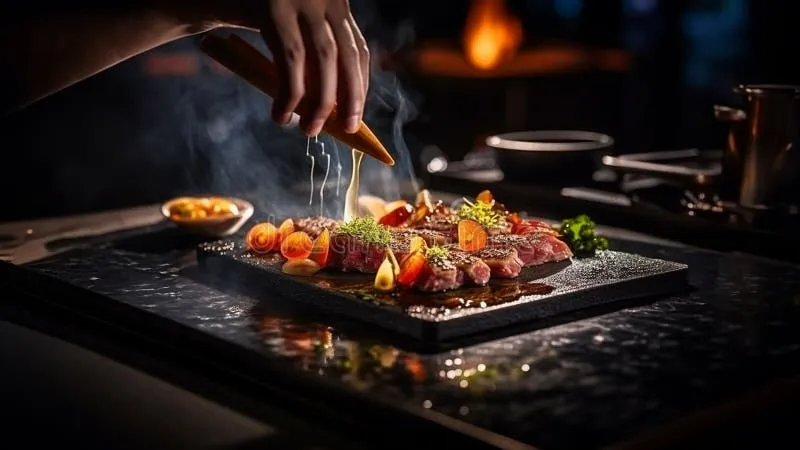
A well-run teppan kitchen adapts along predictable lines. Seasoning simplifies to salt, pepper, and butter or oil. The marinade comes off the protein, or the protein is swapped. The dipping sauces are replaced with a dish of salt and a wedge of citrus. The rice is cooked off the griddle. The noodles disappear. What remains is remarkably close to the original sequence: vegetables, seafood, beef or poultry, rice, and the quiet finish.
Many guests find the adapted version cleaner and more legible, which is not the consolation prize it sounds like.
A Short Script for the Night
Keep it to four sentences when you sit down.
I have a serious gluten allergy, and the kitchen has my note. I cannot have regular soy sauce, wheat noodles, or anything with flour. Would you cook my courses with salt and pepper only, and use a separate spatula? I have brought my own tamari if that is helpful.
A sealed bottle of tamari, offered politely, is accepted at most American counters and refused at a few. Either answer is useful information.
The Honest Limits
There is no way to guarantee a meal below a clinical threshold at a counter that cooks for eight people at once on a single surface. Flour can travel. A kitchen that also runs a tempura station shares air. A restaurant that says it cannot accommodate celiac disease is being honest, not unkind, and the correct response is gratitude followed by a different reservation.
If the reaction risk is severe, the safer plan is a counter with a dedicated gluten-free protocol, booked in advance, at an early seating when the room is quiet and the chef has time to clean properly.
The griddle rewards preparation. So does the guest who reads the bottles before trusting them.