Ten Years Before the Iron: The Quiet Succession Crisis at America's Teppan Counters
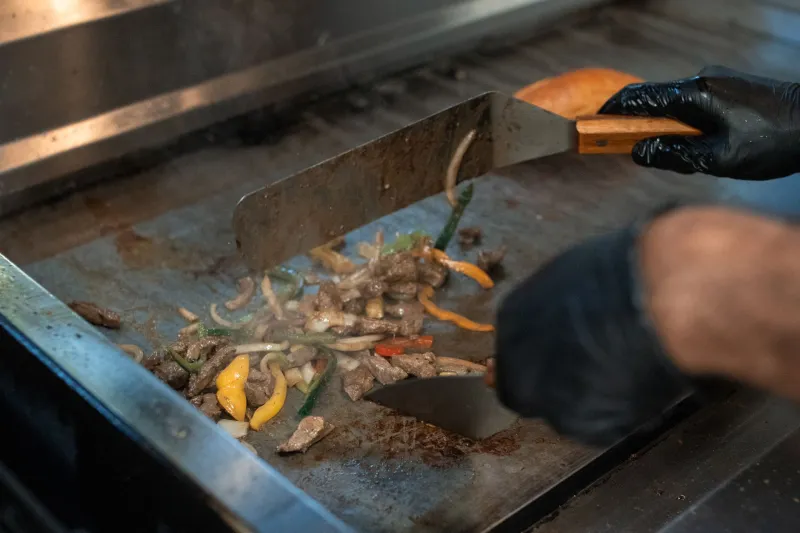
There is a moment, familiar to anyone who has sat at a proper teppanyaki counter, when the chef sets down the spatulas and simply wipes the iron. Nothing is being cooked. Nothing is being performed. The steel is being readied, slowly and completely, for what comes next.
It occurs to me, watching the generation of chefs who introduced this cuisine to American diners approach their final years behind the griddle, that the profession itself is standing at that same moment. The iron is being wiped. The question is whether anyone will be standing there to cook on it.
The Arithmetic of a Decade
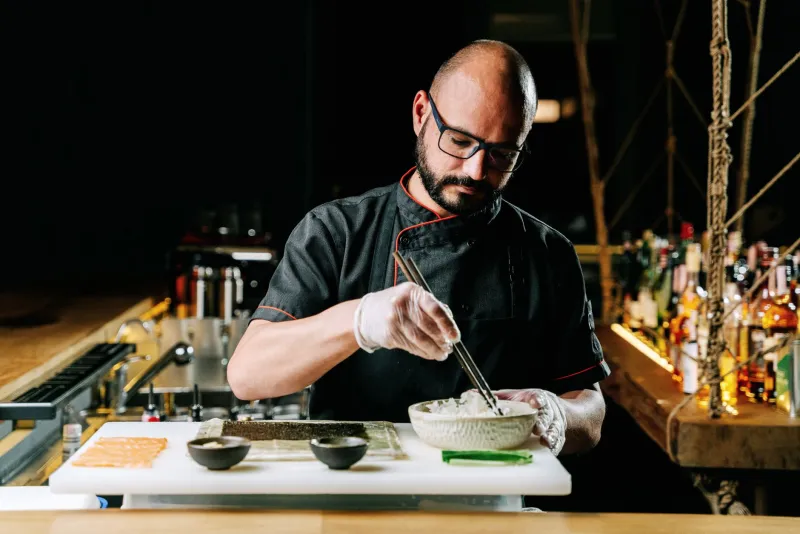
Consider what mastery of the teppan actually requires. Before a cook ever sears a piece of wagyu for a paying guest, there are years of knife work, years of learning how heat moves across steel, years of watching a teacher's hands. In the traditional structure, an apprentice might spend the first twelve months doing little else but cleaning, prepping, and observing. The griddle — the very center of the profession — remains off-limits, a horizon rather than a starting point.
This timeline made a certain sense in the Japan of the 1970s, when the chefs who would later cross the Pacific came of age. It makes almost no sense in the American restaurant economy of today. Culinary school graduates carry debt. Line cooks change jobs for a two-dollar wage increase. A restaurant that asks a twenty-three-year-old to spend years in silent preparation before touching the grill is asking for a commitment that almost no other American profession demands — and offering, in return, a salary that few other professions would tolerate.
The result is a quiet, unspoken crisis. The masters are aging. The pipeline is empty. And unlike a staffing shortage on a busy Saturday, this one cannot be solved with a job posting.
What the Counter Actually Holds
It is tempting to frame this as a labor problem, but that misreads what is at stake. Teppanyaki, done honestly, is not a set of recipes. It is a body of judgment — knowing by sound when the fat has rendered, by smell when the garlic has crossed from golden to bitter, by the drag of the spatula how the iron's temperature has drifted since the last course.
None of that can be written down in a way that transmits it. It moves from hand to hand, over years, the way it always has. This is why the succession question is not really about headcount. A restaurant can hire a cook in a week. A tradition cannot.
When a master retires without a successor, what closes is not merely a kitchen. It is a direct line back to a particular way of understanding fire, steel, and hospitality — one that American dining has spent fifty years learning to appreciate, and has spent almost no time learning to preserve.
One Unlikely Apprentice
And yet the story is not entirely one of loss. In the course of reporting and conversation within this small world, one encounters the exceptions — young cooks who arrive at the counter not through culinary school career fairs but through something closer to conversion.
One such cook, twenty-four years old, working under a master in his sixties, described the arrangement without romance: long prep shifts, minimal acknowledgment, the griddle still largely out of reach. What kept him there, he said, was a single evening when he watched his teacher break down a whole fish on the iron — no wasted motion, no theater, the animal and the steel in complete agreement. He had worked in five kitchens before that one. He had never seen anything that looked like it took ten years to learn.
Whether that conviction survives the economics is the real question. Conviction pays no rent. The masters who hope to pass on their craft are, in effect, asking a young person to believe in a deferred reward in a culture built on immediate ones. Some will. Most, realistically, will not. The restaurants that endure will be the ones that find ways to shorten the silent years without shortening the learning — pairing apprentices with masters earlier, paying for the observation period rather than expecting it as a favor, treating succession as an investment rather than an inheritance.
Wiping the Iron
The generation that brought teppanyaki to Los Angeles, New York, and countless cities between them did something remarkable: they made an entire country sit at a counter and watch its dinner being made. That achievement deserves better than evaporating into staffing math.
The iron, as any chef will tell you, forgives nothing and remembers everything. It holds the seasoning of every meal cooked upon it. The same could be said of a tradition. What the next decade of American teppanyaki looks like depends less on the masters — who have already given what they have — than on whether anyone decides the long apprenticeship is still worth the years it takes.
The griddle is being wiped. Someone still needs to step up to it.