Hand to Handle: A Year on the Iron with Kyoto's Strictest Teacher
The first thing Daniel Ruiz learned at his new post was not a technique. It was a silence. For his first two weeks at the counter, the Kyoto-trained chef who had hired him — a soft-spoken man in his fifties we will call Chef Mori — never once asked him to touch the iron. Ruiz cleaned. He sharpened. He watched. And in that watching, the real curriculum had already begun.
The Apprentice's Education Begins Before the First Cut
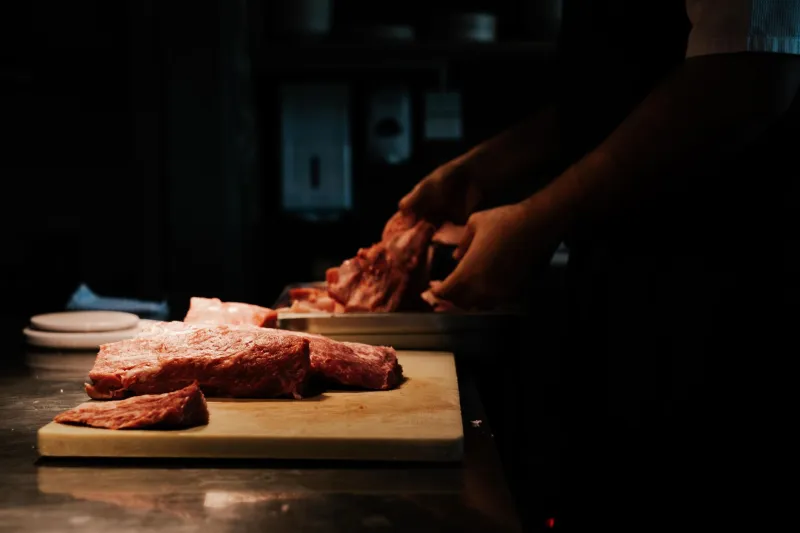
American kitchen culture runs on verbal instruction: call times, tickets shouted, immediate feedback. Mori's method was different. He demonstrated a cut of wagyu into uniform cubes and said nothing. The next morning, Ruiz was expected to reproduce it. When his cubes came out uneven by two millimeters, Mori picked one up, held it to the light, and set it back down. That was the entire conversation.
'I wanted to quit by week three,' Ruiz admits. 'I'd worked Austin and Chicago — fast kitchens, loud kitchens. This was the opposite. Every correction was delivered in maybe four words.'
The philosophy behind the silence is old. In traditional Japanese apprenticeship, the junior learns by proximity and repetition, absorbing rhythm through the body before the mind articulates it. Mori calls it 'borrowing my hands.' The apprentice is not taught the motion so much as exposed to it, thousands of times, until his own hands imitate it without consultation.
Reading the Griddle Like Sheet Music
By month four, Ruiz had earned his first real station duty: the vegetables. It sounds minor. It is not. On a teppan running at 400 degrees Fahrenheit, zucchini and onion behave differently than they do in a sauté pan, and the spatula rhythm — the metronomic tap-tap-turn that reads as theater to diners — is actually a timing instrument. Each tap redistributes moisture. Each turn stages the next sear.
Mori made him count aloud. Not for the customers' benefit, but his own. 'The iron does not wait,' Mori told him, in one of his longest sentences to date. 'You must arrive before it does.'
That single idea reorganized everything Ruiz thought he knew about heat. American cooking education, he says, treats temperature as a setting. Kyoto training treats it as a moving appointment. The griddle cools where protein lands, recovers where it doesn't, and the cook's job is to conduct that shifting map rather than fight it.
What Translates and What Must Be Rebuilt
Not everything crossed the Pacific intact. Ruiz's knife skills transferred — he arrived with sound fundamentals — but Mori made him relearn his grip angle, because the flatiron's geometry punishes the wrist position most Western cooks develop on cutting boards. His sense of seasoning needed demolition: teppanyaki relies on restraint, on letting the fat and the iron do the talking, and Ruiz's instinct to finish everything with acid read, to Mori, as noise.
Other things got rebuilt from zero. The service posture — the way a teppan chef stands, angles the spatula toward the guest, and never turns his back to the counter — has no real American equivalent. So does the pacing of the omakase itself, where the chef controls not just the food but the clock, releasing courses on the griddle's schedule rather than the dining room's.
The Year's Final Exam
On a rainy Tuesday in month eleven, Mori did something he had never done. He stepped away from the iron mid-service, nodded at Ruiz, and sat down at the counter as a customer. Ruiz cooked a six-course omakase for his teacher and a full dining room, hands steady, counting under his breath.
The verdict came later, over staff meal: a single nod, and the first unprompted sentence Mori had offered him all year. 'Next year,' he said, 'we work on speed.'
Ruiz laughs about it now. But the lesson lingers: mastery on the iron is not a destination. It is a tenancy, renewed one service at a time, and the griddle keeps the ledger.