From Dinner Show to Quiet Fire: The Grandchildren Rewriting America's Teppan Story
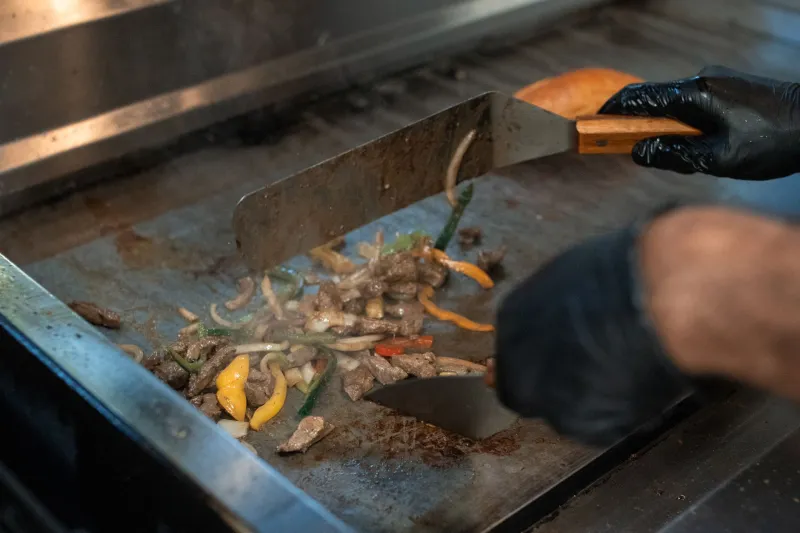
The griddle remembers everything. It holds the ghost of every scallop seared, every garlic chip scattered, every birthday candle of a child's fried rice spectacle. For second- and third-generation Japanese-American chefs now taking over their family's restaurants, the iron carries a heavier memory still: their parents' and grandparents' livelihoods, built in the 1970s and '80s on a dinner-show format that many diners still mistake for the whole of teppanyaki.
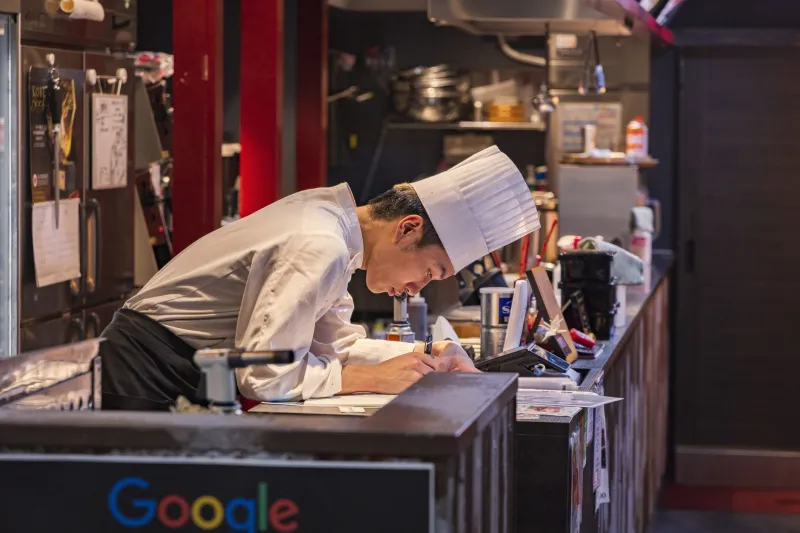
What is happening at these restaurants now — in suburban New Jersey, in the San Gabriel Valley, outside Chicago — may be the most quietly significant development in American Japanese cooking in a generation. The heirs of the hibachi era are not abandoning the iron. They are relearning it.
The Inheritance Problem
Ask any of these chefs about their childhood and the details rhyme. Homework at a corner table. The smell of oil and yuzu at 4 p.m. The particular humiliation and pride of a classmate recognizing your father as the guy who flips shrimp into people's mouths.
The restaurants they grew up in were, for the most part, theater. Onion volcanoes. Sake squirts. A birthday drum solo on the griddle. This format was not a betrayal of Japanese tradition — it was a survival strategy, a way of making Japanese food legible and joyous to American audiences at a time when most Americans knew sushi as a dare. It worked. It fed families. It deserves respect.
But the grandchildren now standing behind the griddle have eaten at better counters than their grandparents ever could. They've staged at Napa kitchens, trained in Osaka, worked the line at sushi-ya in Manhattan. They look at the family griddle and see not a stage but a potential omakase counter — if only the format would let it breathe.
Three Kitchens, Three Compromises
Consider the shape of the problem through three archetypal chefs, composites of many real figures working today.
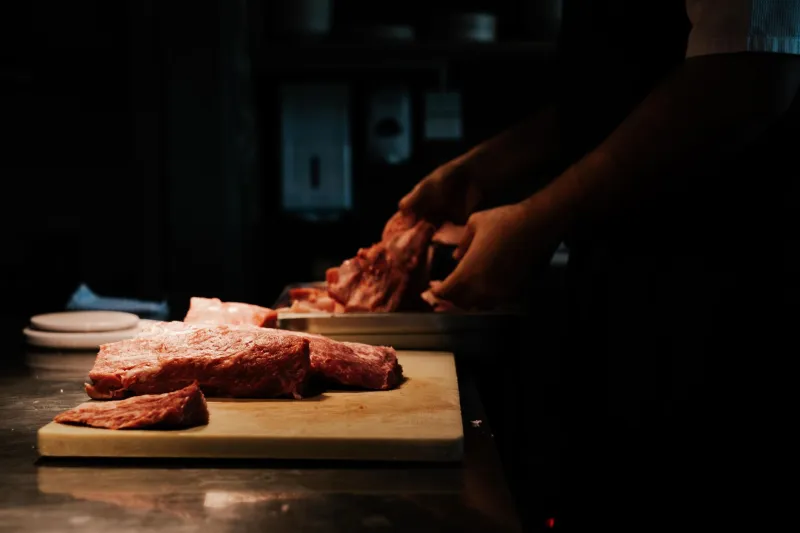
The first is the eldest son who converted gradually. He kept the family name on the awning and the birthday crowds on weekends, but carved out a six-seat counter on Tuesday and Wednesday nights: no theatrics, a single seasonal menu, A5 wagyu sourced directly from a Kagoshima supplier. The parents were skeptical for two years. Then the reservation list outgrew the show room.
The second is the daughter who left entirely and came back. She spent a decade in fine dining, returned when her father fell ill, and found she could not run the restaurant as it was — nor did she want to. Her solution was subtraction: fewer seats, no volcano, the garlic rice served at the end of the meal like a course rather than a stunt. Regulars wept. Some never returned. She considers that a fair trade.
The third is the grandson who never changed the menu at all — he changed the ingredients. Same theatrical format, same onion bloom, but now with day-boat scallops, house-made tare aged in barrels, and a wagyu program that would not embarrass a Kyoto teppan-ya. His argument is disarmingly simple: the joy is the tradition. Elevate what's inside the performance rather than dismantling it.
What Heritage Actually Gives You
It is tempting to frame these chefs as correcting a historical error — returning teppanyaki to its dignified Japanese origins after decades of American distortion. That framing flatters them and insults their grandparents, and it is mostly wrong.
What heritage actually gives these chefs is not a purer recipe. It is proximity. They know the griddle the way farm children know soil — its moods, its heat lag, the way it tells you when the oil is ready before any thermometer does. That embodied knowledge, absorbed in childhood, is exactly what the omakase format rewards: intimacy between cook, iron, and guest.
They also carry something their Japanese-trained peers lack: fluency in the American diner. They know why the volcano existed. They know which guests need ceremony and which need silence. The best of them deploy both, reading the room as their fathers read the griddle.
The Third Generation Effect
Call it the third generation effect: a cuisine arrives as performance, survives as comfort food, and matures — if it is lucky — into craft. Italian-American red sauce restaurants made this journey. So, unevenly, did American sushi. Teppanyaki is arriving now, carried by heirs who neither romanticize the dinner show nor feel shackled by it.
The iron, in the end, does not care about format. It only asks for heat, fat, salt, and attention. The grandchildren of the hibachi pioneers are finally free to give it exactly that — and in doing so, they are honoring their families more completely than any onion volcano ever could.