Steel, Salt, and the Weight of the Griddle: A Quiet Inventory of the Teppan Kitchen
Ask a dining room to describe teppanyaki and the answer almost always involves the knife: the rhythmic tapping, the flash of steel, the effortless division of a wagyu loin into uniform medallions. Chefs will tell you a different story. Behind the counter, the knife is merely one instrument in an orchestra — and rarely the first violin.
The Griddle Is the Recipe
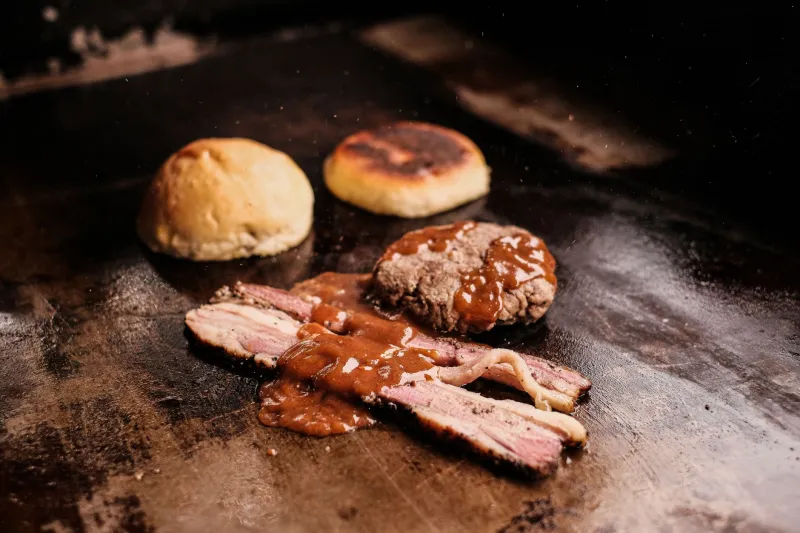
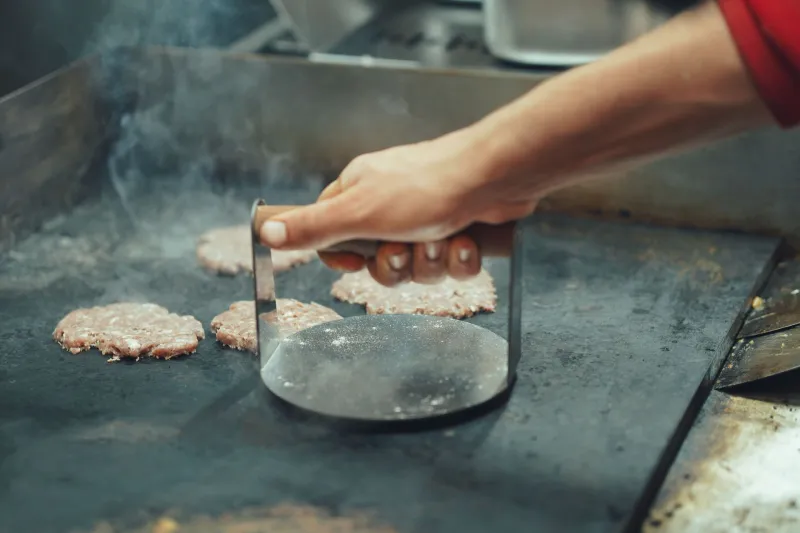
Before a single utensil is lifted, the most consequential tool has already been chosen: the teppan itself. American chefs tend to be evangelical about composition. A griddle that runs too thin reacts to every steak like a startled animal, spiking and plummeting with each addition. Thicker plate — often a half-inch or more of rolled steel — absorbs the shock of a cold protein and releases it slowly, which is precisely what a delicate piece of snapper or a seared scallop demands.
Several chefs we spoke with described seasoning their griddles the way a cast-iron devotee seasons a skillet: months of oil, salt, and patience until the surface darkens into a near-nonstick patina. One Los Angeles chef put it plainly. "People think the flavor comes from the butter. The flavor comes from ten thousand meals cooked into this steel."
The Spatula: A Question of Balance
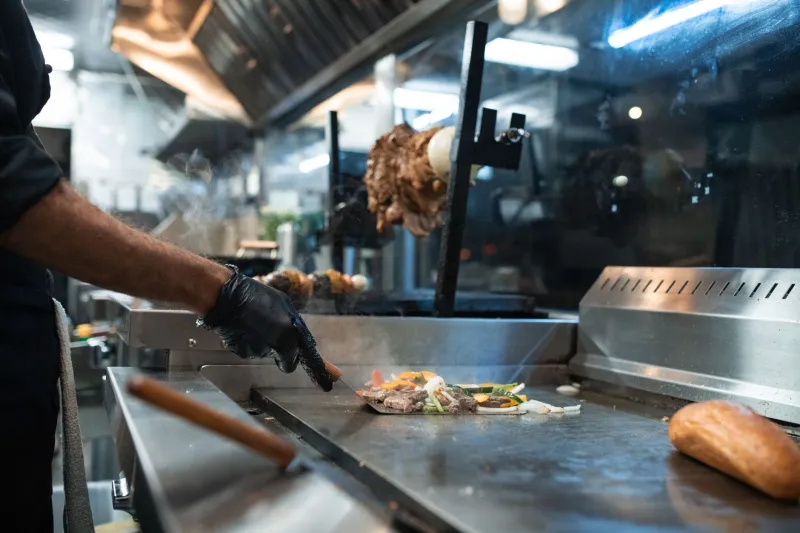
If the griddle is the foundation, the teppan spatula — the hera — is the hand. And here, the variables multiply. Weight matters, but so does distribution; a spatula that is blade-heavy tires the wrist during a long omakase, while one that is handle-heavy loses the finesse required to lift a single strand of noodle without disturbing its neighbors.
Steel gauge, edge bevel, even the angle at which the handle meets the blade — each choice ripples through the finished dish. Chefs who trained in Osaka often prefer a lighter, whippier hera suited to quick yakisoba work and the flourishes of the teppan tradition. American practitioners grilling thicker cuts of prime beef frequently gravitate toward heavier tools that can press, lift, and turn a twelve-ounce filet without flexing.
Ask which tool they would never compromise on, and the answer is nearly unanimous: the spatula. Knives can be swapped and sharpened; a spatula that fits the hand becomes an extension of intent.
The Scraper's Quiet Authority
The least glamorous implement on the counter may be the most revealing. The scraper — a wide, flat blade used to cleanse the griddle between courses — determines the tempo of the entire meal. Its angle of attack decides whether carbonized residue lifts away cleanly or smears into the next course's sauce.
A disciplined scrape is invisible to the guest; the griddle simply appears renewed between the appetizer and the fish course. A careless one announces itself as a faint bitterness under an otherwise pristine beurre blanc. In omakase service, where the sequence of flavors is choreographed down to the sauce, that invisible hygiene is non-negotiable.
Why the Knife Gets Too Much Credit
None of this diminishes the knife's role — yanagiba and deba still do the precision work of portioning before anything touches the iron. But at the teppan, much of the knife's traditional drama is structural rather than culinary. The cuts are made ahead; the counter work is about heat, fat, timing, and touch.
Which suggests a quiet truth about the craft: teppanyaki is less a performance of blades than a negotiation with a slab of steel. The chefs who excel are the ones who listen to their equipment — who know, down to the ounce, what their spatula weighs and what their griddle will forgive.
The next time you take a front-row seat, watch the scraper as closely as the knife. The meal is being shaped long before the blade comes out.