Aroma as Appetizer: The Invisible First Course of the Teppan Omakase
The first course at chef Mariko Tanabe's eight-seat counter in Portland is not served on a plate. It arrives on the air.
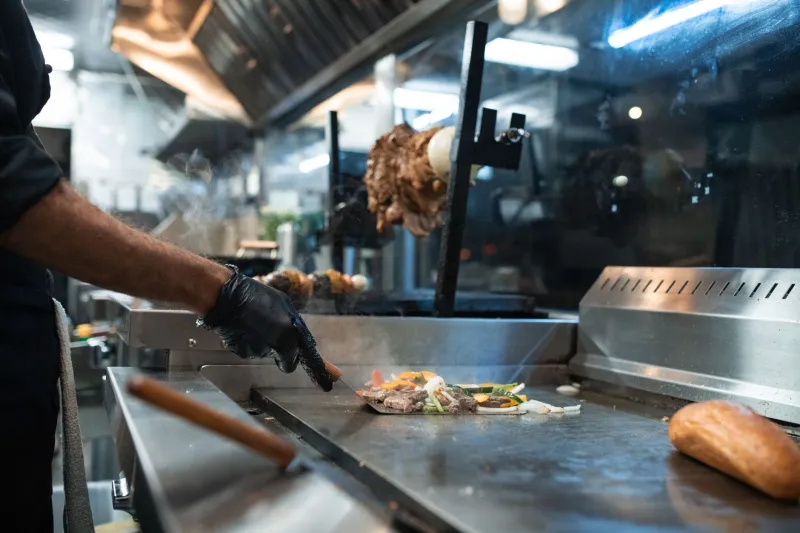
Roughly ninety seconds before the first hors d'oeuvre touches a guest's placemat, Tanabe presses a clove of crushed garlic against steel heated past 400 degrees. The oil shivers. A column of fragrant steam rises, drifts across the counter, and settles over the diners like a curtain being lifted. Only then does she plate the first course.
"The nose eats first," she told me on a quiet Tuesday afternoon, hours before service. "If I let the garlic hit the iron at the wrong moment, the whole meal tastes different. Not because of the garlic — because of what the guest is ready to taste."
Scent as Sequencing
In the classical Japanese kitchen, timing is a discipline measured in breaths. In teppanyaki, that discipline extends beyond the griddle and into the dining room itself. Aroma, Tanabe insists, is choreography — a deliberate sequence of scents designed to open the palate in stages.
Her omakase unfolds in three aromatic movements. The first is sharp and familiar: garlic, scallion, a whisper of toasted sesame. These are scents Americans recognize on a cellular level, and their purpose is welcome. They lower the guest's guard.
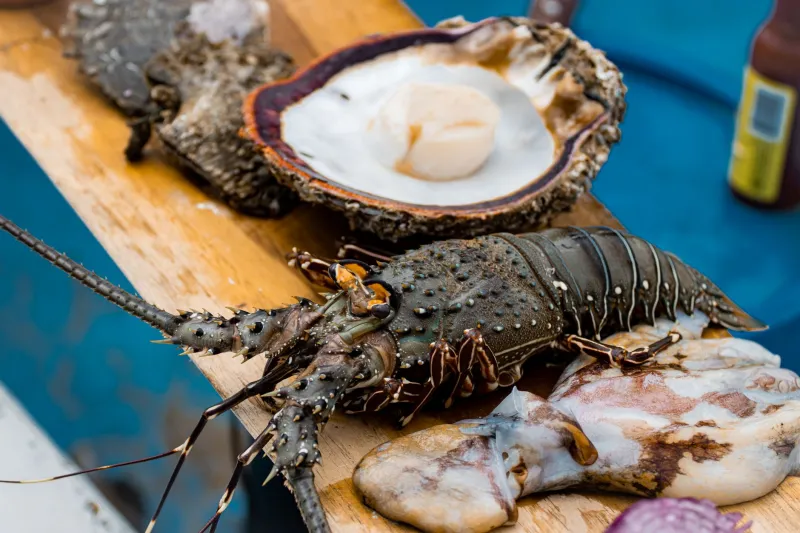
The second movement is subtler. As the first courses are served, Tanabe wipes the griddle and grills nothing at all for several minutes. The absence of aroma is intentional. "When the nose rests, the tongue wakes up," she explains. Diners, she has observed, taste the delicate courses — the chawanmushi, the raw segment of scallop — more attentively when the air is neutral.
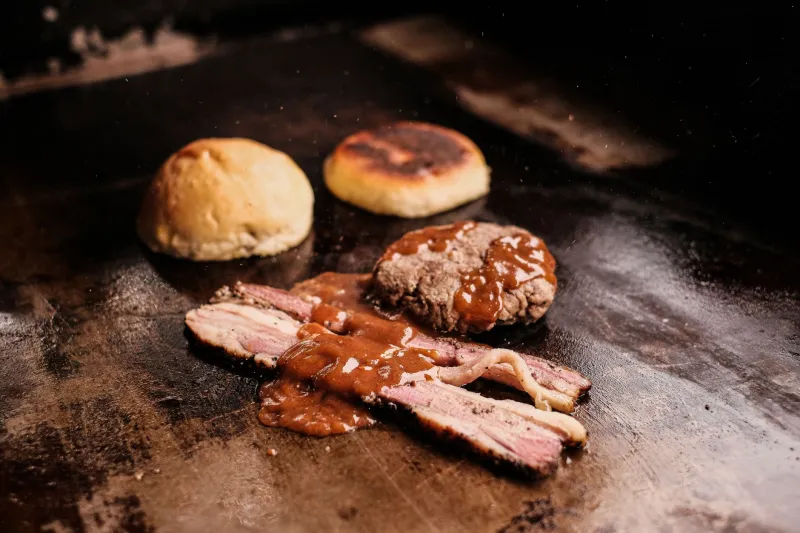
The third movement returns with force: fat, smoke, and char, arriving just as the beef course is laid down. By then, the palate has been primed twice — once by invitation, once by restraint — and the seared wagyu lands on senses already heightened.
What the Sizzle Is Actually Saying
Aroma is only half of the prelude. Tanabe also engineers sound.
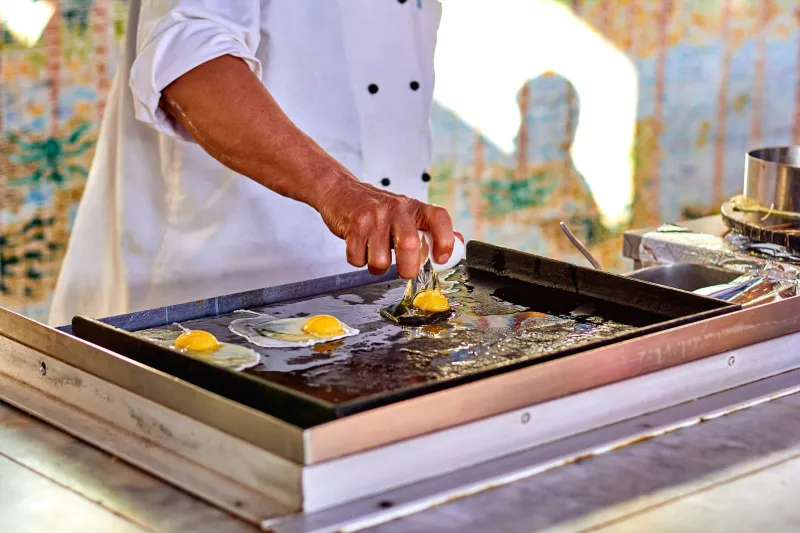
The hiss of protein striking hot steel is not incidental noise; it is information. A dry, crackling sear tells the guest the griddle is at temperature and the crust will be proper. A wet, anemic sizzle betrays moisture, crowding, impatience. Trained diners — and Tanabe believes Americans can be trained quickly — begin to read the griddle the way concertgoers read an orchestra's tuning.
"In Japan, guests at a good teppan counter lean forward when they hear the right sound," she says. "In America, guests lean forward when they see a knife trick. I would like to change what they lean forward for."
Steam, too, is a tool. When Tanabe lifts a dome over vegetables, the released plume carries ginger and mirin directly to the guest seated nearest the griddle. Seating assignments at her counter are made with airflow in mind — a consideration almost no American diner would think to notice, but one their senses register regardless.
What American Kitchens Could Borrow
Tanabe is careful not to frame her practice as exotic. Her argument is that aromatic sequencing is simply good hospitality, and that American restaurants of every stripe could adopt it.
Her suggestions are disarmingly practical. Time the most fragrant kitchen task — the garlic, the onions, the bread in the oven — to land minutes before the first plates, not throughout the evening. Build one deliberate moment of scentlessness into the meal. Let the strongest aromas coincide with the richest dishes, so the senses and the food crest together.
"A dining room that smells the same at 6 p.m. and 9 p.m. is a dining room that isn't paying attention," she says.
The Meal That Begins Before the Meal
The most elegant idea in Tanabe's kitchen is also the oldest: that a dinner does not start when the food arrives, but when the guest begins to anticipate it. Scent, sound, and steam are how a teppan chef conducts that anticipation — quietly, invisibly, before a single bite.
The next time you sit at a serious counter, notice what reaches you first. It will not be the plate. It will be the air, and it will have been sent on purpose.