Small Hands, Hot Steel: Why the Tiniest Diners at the Teppan May Matter Most
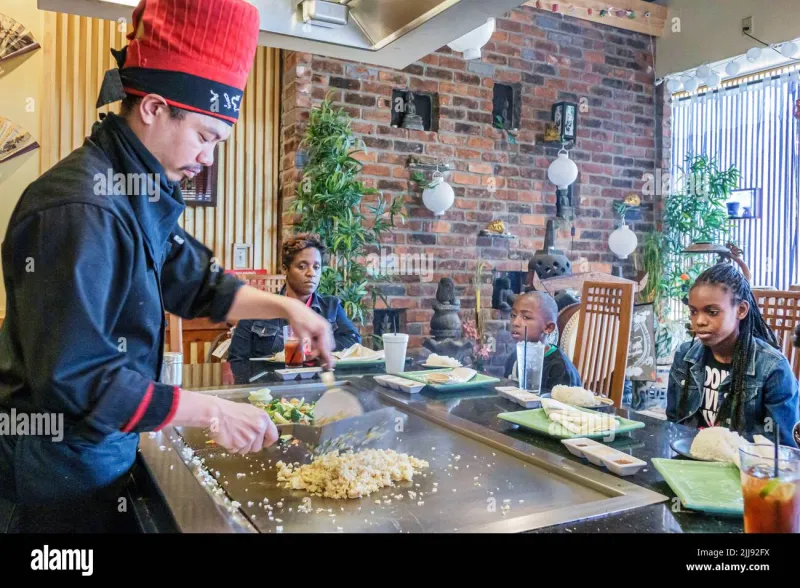
Photo: child watching chef cook at teppanyaki grill counter japanese restaurant, via c8.alamy.com
There is a moment, familiar to anyone who has spent enough evenings at a teppan counter, when a child arrives. The parents look apologetic. The other guests do a quick, silent calculation of their evening. And the chef — this is the part that matters — the chef simply nods, adjusts the rhythm of the service, and begins.
In most American fine dining, that scene does not happen. A five-year-old at a $300 omakase counter would be a reservation error, a social faux pas, a quiet scandal. At a teppanyaki restaurant, it is Tuesday.
The Only Fine Dining That Blinks
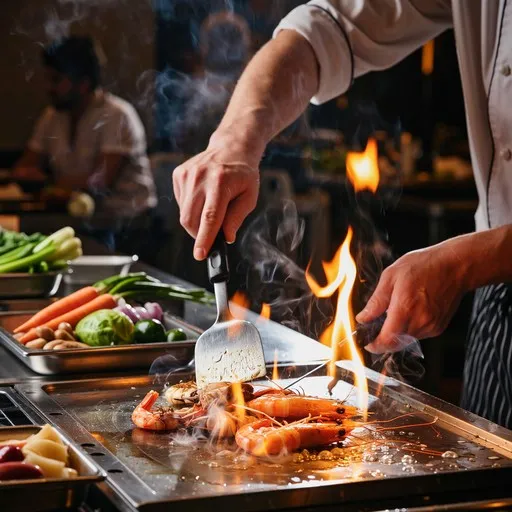
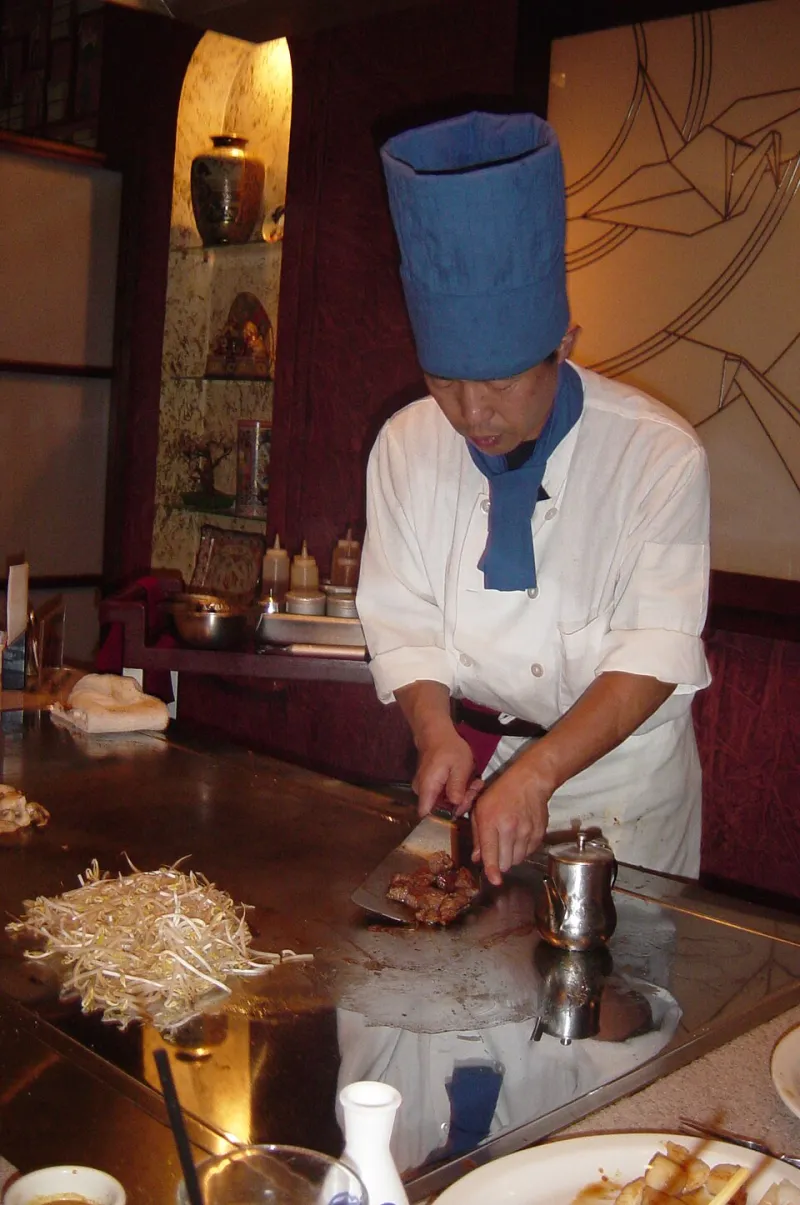
Consider what the teppan format actually is. The kitchen is not hidden; it is the room. The chef works in full view, at eye level with a seated child in a way no saucier behind a pass ever will be. The food arrives in sequence, in small portions, cooked seconds before it is eaten. There is fire, there is rhythm, there is the hypnotic scrape of the spatula. It is, structurally, the most child-legible form of haute cuisine in existence.
Critics have long dismissed the format's theatricality as a concession to unsophisticated palates. But look again through the eyes of a six-year-old and you see something else: an honest transaction. Nothing is hidden, nothing is pretentious, nothing pretends to be other than what it is. A piece of fish is shown, seared, and served. For a child learning what restaurants are, that transparency is not a gimmick. It is a curriculum.
What the Chefs Say
Talk to teppan chefs working serious counters in Los Angeles, Chicago, or New York, and a pattern emerges. None of them romanticize having children at the rail — a hot griddle and a restless toddler are a genuine safety equation — but nearly all of them refuse the alternative.
One chef I spoke with, who trained in Osaka before opening a counter in Southern California, put it plainly: the teppan taught him to cook by watching his own teacher's hands when he was young. Denying a child the same view, he said, would be a kind of forgetting. Another described quietly modifying the omakase for young diners — lighter seasoning, earlier courses, a smaller portion of the premium beef — without ever lowering the standard of the cooking itself. The child eats the same meal, in miniature, made with the same hands.
That distinction is everything. Accommodation is not dilution. The griddle does not cook down to anyone.
The Parents' Bargain
For parents, the calculus is different and more anxious. A $300 seat is a real investment, and no one wants to spend it watching a child melt down between courses. The parents who bring young children to high-end teppan tend to be gamblers of a particular kind: they are betting that their kid, given something genuinely worth watching, will rise to the occasion.
They are usually right. Children are not distracted by the teppan; they are arrested by it. The chef who flips a piece of zucchini and lands it on a plate three feet away has, for the duration of that moment, a more attentive audience than any stage in America. Several parents told me the teppan counter was the first restaurant where their children finished every course — and the first where they asked questions about what they were eating.
Accessibility or Erosion?
The honest objection remains. If a counter seats children, does it risk becoming something less serious? Does the theater, already a contested element of the format, tip further toward entertainment and further from craft?
I think the fear gets the causality backward. Teppanyaki's openness to families is not a concession that eroded its standards; it is a feature that has always coexisted with them. The format never pretended to be a hushed temple. Its seriousness lives in the knife work, the sourcing, the timing of the iron — none of which is diminished by a child in the third seat. A cuisine that can hold a $300 wagyu omakase and a first restaurant memory in the same room is not compromised. It is durable.
There is also a blunter point worth making: American fine dining has a pipeline problem, and every cuisine that welcomes children young is solving it. The sushi chefs, ramen cooks, and teppan chefs of 2050 are currently eight years old, sitting somewhere with their parents, watching hands work. The cuisines that let them watch will be the cuisines that survive.
The Long Game of the Iron
Every teppan chef in America was once someone's child at a counter, or the apprentice of someone who was. The format's radical accessibility — the same counter, the same fire, the same meal for everyone seated at it — is precisely what lets it pass itself down. A dining room that hides its kitchen cannot recruit a six-year-old. A griddle has no choice but to.
So yes, seat the five-year-old. Adjust the pacing, soften the salt, serve the steak in smaller coins. The iron will not notice the difference. But the child will remember it for the rest of their life, and one day, likely enough, they will stand on the other side of the steel and pass it on.