Listening for Dinner: The Audible Architecture of the Teppan Counter
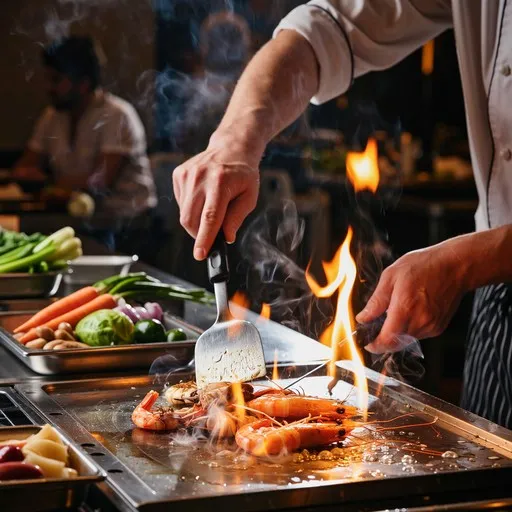
Photo: teppanyaki chef griddle sizzle steam fine dining counter, via images.stockcake.com
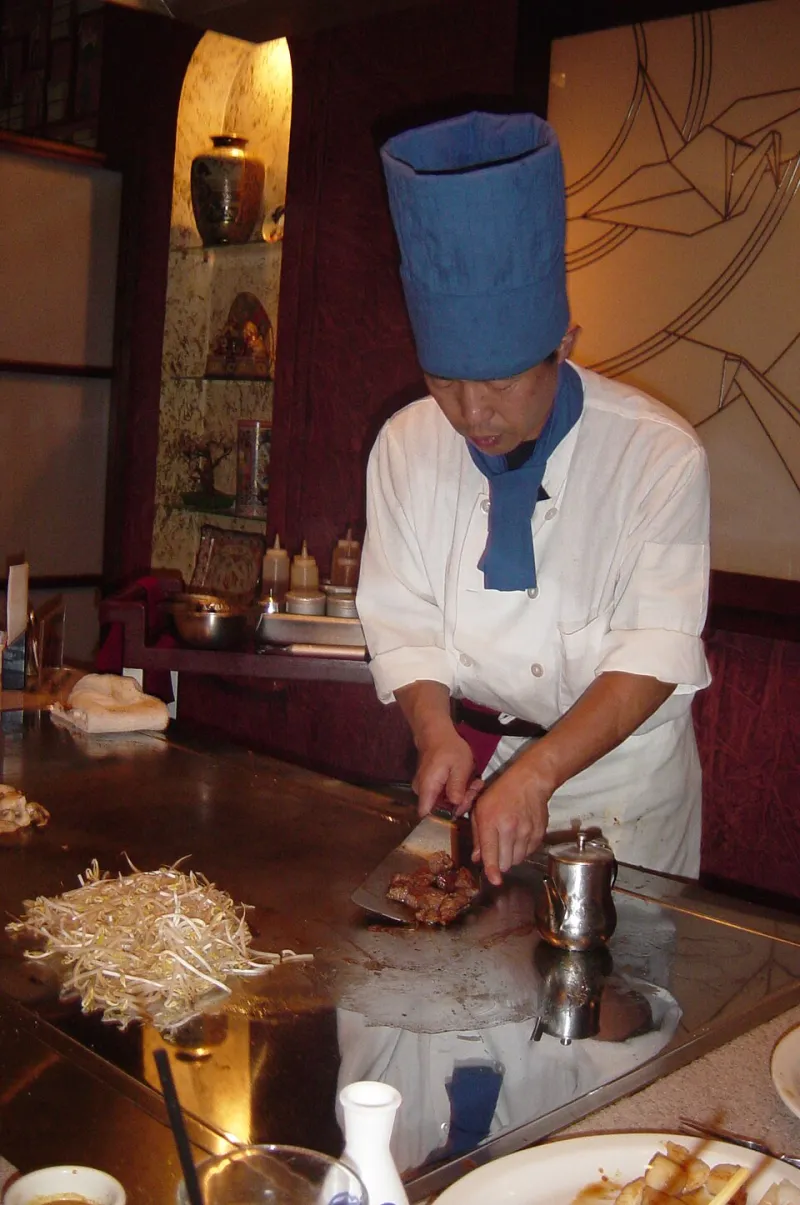
There is a moment, familiar to anyone who has taken a seat at a serious teppanyaki counter, when the meal begins before anything is cooked. The chef wipes the steel. A flick of oil catches the light. Then comes the sound — a low, building hiss as the first slice of beef meets the griddle — and with it, the aroma, rising off the iron and arriving at your seat like a host greeting you at the door.
No other format in American fine dining works this way. The tasting-menu temples of New York and the Napa Valley present food as a finished object, delivered to the table with a minimum of noise. The teppan presents food as an event in progress, and the medium of that announcement is sound.
What the Griddle Says That the Kitchen Cannot
A conventional restaurant kitchen is acoustically sealed from the diner. The searing, the shouting, the clatter of pans — all of it happens behind a door, and what emerges is plated quiet. The teppanyaki counter abolishes that wall. Every stage of the cooking is broadcast at conversational distance: the sharp crack of a scallop hitting steel, the softer patter of vegetables, the deliberate scrape of the spatulas that functions almost as punctuation between courses.
Chefs I spoke with describe this soundscape as a tool, not a byproduct. "The hiss tells me things," one Los Angeles-based chef explained. "The pitch of the sizzle tells me the pan temperature. The rhythm tells my guests that something is happening. Diners lean in when they hear it. You can't get that from a kitchen three floors down."
The science backs up the intuition. Sound shapes flavor perception — research out of Oxford's crossmodal lab has shown that crispness, sizzle, and ambient noise measurably alter how we taste. The teppan exploits this without pretense. The crackle of the griddle is not entertainment bolted onto dinner; it is dinner, transmitted early.
Hearing Dinner Before Eating It
Ask regulars why they return and a striking number reach for the same phrase: they hear the meal first. One diner in Chicago put it to me this way: "By the time the beef gets to my plate, I've already smelled it for five minutes and watched it for three. The first bite is almost a formality — a very good formality."
That anticipation is doing real work. Appetite is built in stages, and the teppan stages all of them at once. The aroma of garlic hitting oil primes the palate. The sizzle sets a tempo. By the time the first course lands, the guest is not a blank slate but an engaged participant whose senses have already been convened.
Compare this to the hushed tasting room, where anticipation is manufactured through narrative — the server's recitation, the provenance story, the ceremony of the reveal. Both approaches create expectation. Only one of them does it through the oldest sensory channels we have: sound and smell, unmediated.
The Case for Volume
There is a lingering prejudice in American fine dining that elegance is quiet. The teppan refutes this nightly. The griddle's soundscape is not loud in the way a dinner show is loud; at its best, it is precise — a percussion section with a discipline to it. The scrape of the spatula cleaning the steel between courses is as ritualized as the pouring of a sake.
What the noise communicates is transparency. You cannot hide a mediocre ingredient from a guest sitting eighteen inches from the griddle, and you cannot hide an overcooked piece of fish either. The sound is part of that accountability. When the sear is right, everyone in the room knows it, because everyone in the room heard it happen.
This, I would argue, is why the format has endured six decades in the United States while so many other dinner spectacles have faded. The theater of the teppan is not decoration. It is evidence. The hiss is the sound of a promise being kept, made in public, at full volume, on a slab of steel.
An Invitation to Listen
The next time you take a seat at the counter, try a small exercise. Close your eyes for the first ninety seconds. Listen to the oil, the steel, the rhythm of the knives and spatulas. Breathe in the aromatics as they arrive in sequence — the garlic, the smoke, the caramelizing edge of onion.
You will find that the meal has already begun, and that the first course was, in truth, a sound.