Garlic Rice and the Art of the Finish: What the Last Course of Teppanyaki Is Really Saying
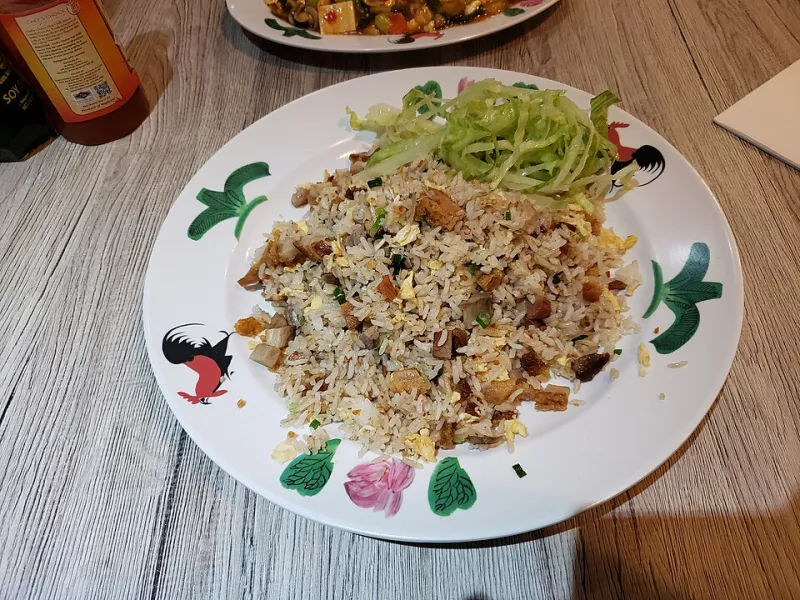
Photo: Andy Li, CC0, via Wikimedia Commons
Somewhere between the wagyu and the bill, at nearly every teppanyaki counter in America, a small ritual unfolds. The chef clears the griddle with a single stroke, drops a knob of fat into the residual heat, and folds day rice through minced garlic and the concentrated drippings of everything that came before it. A pickle arrives on the side — cucumber, perhaps, or takuan. Then the counter goes quiet.
This is the last bite of the night. And for many American diners, it is also the most confusing one.
The Course That Uses Everything
Understand what is actually happening on that iron surface. The rice course is not cooked on a clean griddle. It is cooked on a griddle that has, over the past ninety minutes, seared scallops, rendered beef fat, caramelized onions, and absorbed the fond of a dozen ingredients. That seasoned surface — the Japanese call it the griddle's koor of memory, for lack of a better word — is the true seasoning of the final course.
Nothing is washed away. The garlic rice is, in a very literal sense, a distillation of the entire meal. Each grain carries the residue of the scallop's sweetness, the smoke of the steak, the char of the vegetables. It is the omakase compressed into a single spoonful. No French kitchen would dare attempt this; no French kitchen could.
The pickles are not a garnish but a necessary counterweight — a bright, acidic full stop after sixty minutes of fat and salt. In Kyoto, where the final rice course carries the weight of centuries of shuno preservation tradition, the pickle selection is treated with the seriousness a sommelier reserves for a last pour.
Completion, Not Indulgence
Western dining logic runs on escalation. The meal should crescendo — the dessert should be the sweetest, richest, most memorable moment. We have built an entire culture of pastry on the assumption that a meal must end in indulgence.
The Japanese logic is different. The meal ends in completion. The final course should settle the stomach, close the palate, and return the diner to equilibrium. Rice is the most humble ingredient in the Japanese pantry, and placing it last is a statement: the meal began with the chef's ambition and ends with the diner's contentment. The arc bends toward rest, not toward more.
There is a word for this sensibility — the idea that restraint at the end is itself a form of generosity. A dessert after garlic rice would not elevate the meal. It would erase it, coating the palate in sugar and undoing the careful work of the previous hour.
The American Dessert Question
And yet, walk into a teppanyaki counter in Los Angeles or Chicago and there is a decent chance a molten chocolate cake or a matcha tiramisu will follow the rice. Some of this is economics — desserts carry margins. Some of it is habit; American diners have been trained since childhood to expect a sweet ending and feel cheated without one.
But we would ask chefs to trust the rice. The most confident counters in this country — and the ones earning the fiercest loyalty — have already made the switch, offering nothing after the pickles but green tea. Diners report the same thing: they leave lighter, more satisfied, more aware of what they ate. The meal reads as an experience rather than a quantity.
If a kitchen absolutely must offer something sweet, let it be a single perfect item — a slice of seasonal fruit, a small yokan — served apart from the counter, after the iron has been wiped down. The distinction matters. The omakase proper should end where it began: on the griddle, with the chef's hands, and with rice.
The Last Lesson of the Iron
There is a humility in the garlic rice finish that says more about teppanyaki than any performance could. The meal does not end with the chef's showpiece. It ends with the cheapest ingredient on the menu, transformed by everything that came before it into something no single course could achieve alone.
That is not a dessert. That is a philosophy — served warm, in a small bowl, with a pickle on the side.