One Counter, No Exceptions: The Radical Democracy of the Teppanyaki Experience
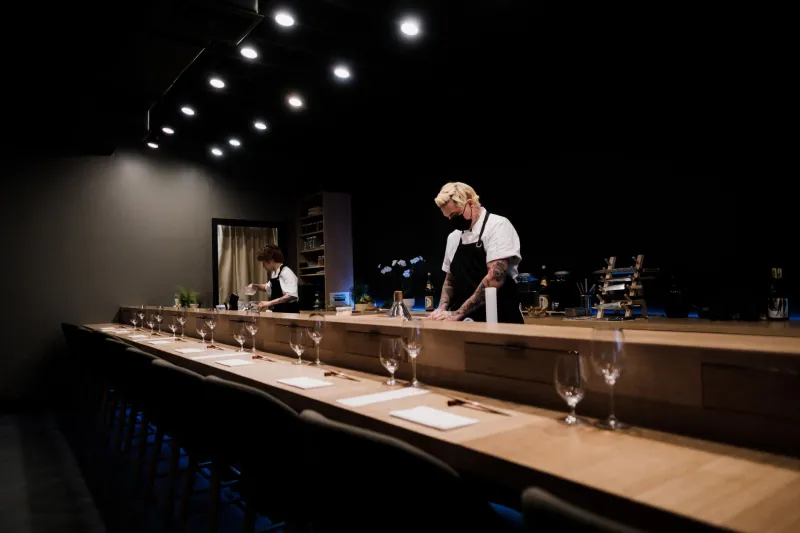
There is a quiet heresy at the heart of teppanyaki, and most American diners walk right past it on their way to their seats. The heresy is this: there are no bad seats. There is no corner table, no view of the kitchen's back hallway, no waiter deciding whether you are worth the chef's attention. There is one counter, one griddle, one performance — and every guest at that counter receives the identical experience, down to the flick of the spatula.
In a country where fine dining has historically been measured by exclusion, this is not a small thing. It is worth examining closely.
The Architecture of Exclusion
Consider how luxury is typically constructed in American restaurants. The private dining room behind the unmarked door. The wine list handed only to the person who made the reservation. The chef's table that requires connections, deposits, or a reservation made months in advance for a party of exactly two. Even the omakase counters that have proliferated across Los Angeles, New York, and Chicago — wonderful as they are — often restrict access through scarcity: eight seats, two seatings, book on the first of the month or forget about it.
The message, whether intended or not, is that the finest experiences are rationed. Scarcity becomes a flavor of its own.
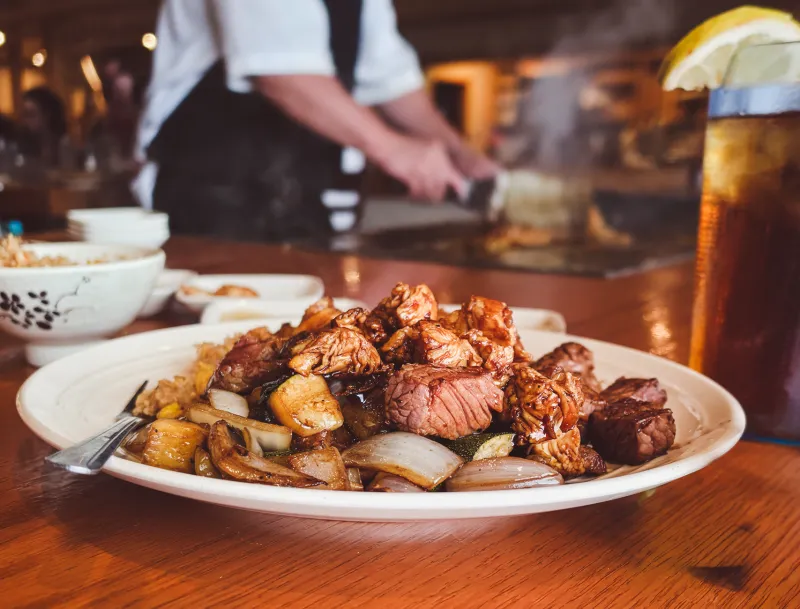
Teppanyaki, at least in its traditional Japanese formulation, refuses this logic. The griddle seats everyone at once. The chef cooks for all parties simultaneously, in full view, with nothing hidden. A first-time visitor celebrating an anniversary sits shoulder to shoulder with the regular who has eaten at that counter forty times. Both watch the same knife work. Both receive the same garlic rice, finished with the same flourish. The theater is not a perk reserved for VIPs; it is the room itself.
What the Open Griddle Teaches
Skeptics will say this is merely a function of format — that a griddle is a griddle, and the shared counter is a practical necessity, not a philosophy. But spend an hour at a serious teppan counter and the practicality reveals itself as something more deliberate.
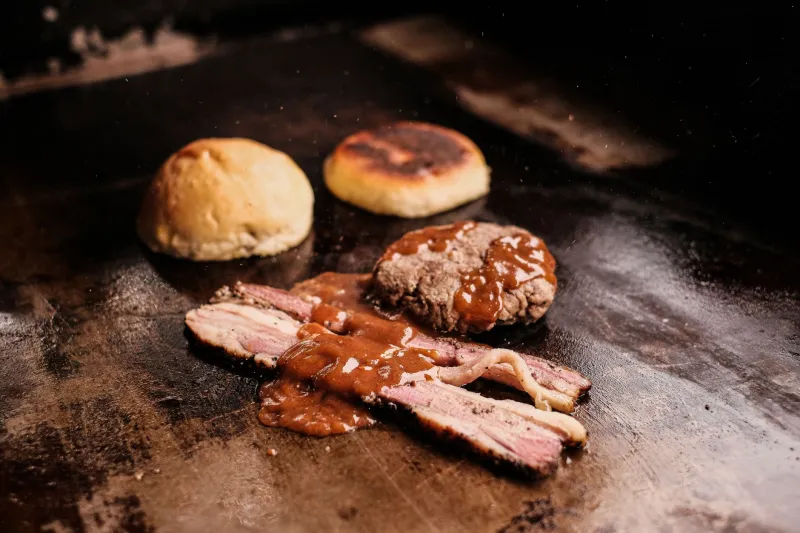
When a chef works an open iron griddle, there is nowhere to hide. Every technique is legible: the way the protein is pressed to test doneness, the moment the oil is wiped back, the precise second the garlic hits the steel. Diners learn things about cooking that a closed kitchen deliberately conceals. They also learn something about fairness. If the chef cuts corners, everyone sees it. If the chef excels, everyone witnesses it together.
This transparency has a democratizing effect that extends beyond the meal. Strangers at the counter talk to one another, prompted by the shared spectacle. The meal becomes communal in a way that booth-based fine dining rarely permits. In Japan, where teppanyaki emerged in the postwar era and matured in Osaka's hotel kitchens, this conviviality was part of the appeal. American restaurants, importing the format, have found that it travels well — perhaps because it answers a loneliness built into so many luxury experiences.
How the Format Is Reshaping American Omakase
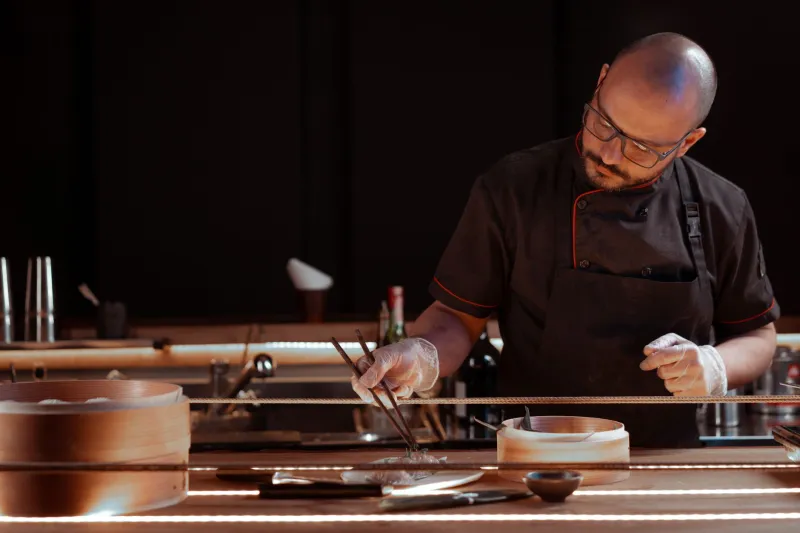
The influence is already visible. Omakase counters across the United States have adopted the teppanyaki principle of the single shared stage, even when the cooking medium changes. The chef stands; the guests face inward; the performance is universal. What began as a Japanese tradition of trust — omakase literally means 'I leave it up to you' — has merged with the teppan ethic of visibility to produce a distinctly American hybrid: the open counter where exclusivity is replaced by immediacy.
This is not to romanticize the industry. High-end teppanyaki in the US can still carry steep price tags, and scarcity of a different kind — limited seatings, premium ingredient surcharges — persists. But the structure of the experience itself resists hierarchy in a way few other formats do. You cannot quietly receive better treatment than the person beside you. The griddle does not play favorites.
There is a lesson here for the broader dining culture. Americans have been trained to believe that the pinnacle of fine dining is privacy: the corner booth, the hidden room, the bespoke menu nobody else gets. Teppanyaki proposes an alternative definition of luxury — that the rarest thing a restaurant can offer is not separation but undivided, universal attention. One chef, one fire, one performance given wholly to everyone present.
The Seat Is Not the Point
The next time a reservation system collapses under demand for a twelve-seat counter, it may be worth remembering that the seats were never the point. The point is the iron, the openness, and the insistence that a great meal is not a prize distributed to the worthy but a craft performed for all who gather to watch.
Teppanyaki understood this before the rest of the dining world caught up. The counter has always been level. It is the rest of fine dining that is only now beginning to flatten.