Surrendering the Menu: What American Diners Discover When They Let the Chef Decide
We are a nation of substitutions. Ask for a burger in any American city and you'll be offered a decision tree: how cooked, what cheese, which bun, gluten-free? Customization is not merely an option here; it is an expectation, a consumer right as old as the republic itself. And yet, across the country, the most coveted seats in dining are the ones where the diner makes no decisions at all.
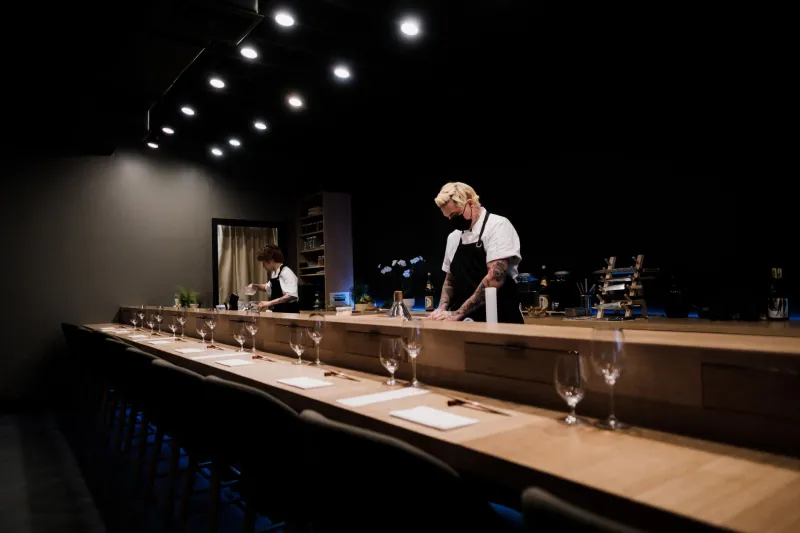
The omakase counter — where the chef alone determines what you will eat and in what order — has become the pinnacle of the American fine-dining experience. From Manhattan basements to Los Angeles strip malls, reservations are measured in weeks, not days. The question worth asking is why. Why would a culture raised on having it your way fall so completely for having it the chef's way?
Choice as Burden
There is a quiet exhaustion in the modern restaurant experience. The menu, once a gateway, has become a gauntlet — twelve appetizers, a dozen mains, wine pairings, tasting supplements. Psychologists have long documented the fatigue that comes from too many options, and restaurants have quietly absorbed the research. The diner who sits at an omakase counter is, in a sense, going on vacation from decision-making.
But framing omakase as mere relief undersells it. The Japanese phrase omakase shimasu translates roughly to "I leave it up to you," and embedded in that phrase is something more profound than convenience. It is an act of trust — a declaration that the person behind the counter knows something you do not. In an era when Yelp has turned every diner into a critic, that trust is almost countercultural.
The Chef as Reader of the Room
What the diner surrenders, the chef inherits — and what the chef does with it is where omakase becomes art rather than service. A skilled omakase chef is not executing a fixed program. They are improvising against three moving targets: the season, the ingredients, and you.
The season dictates the foundation. Japanese cuisine has historically been organized around shun — the brief window when an ingredient is at its absolute peak. A spring omakase might open with mountain vegetables and the first amberjack of the year; a winter one might build toward rich, fatty toro and warming nabemono courses. The chef who trained for decades in this tradition is not choosing randomly; they are translating the calendar onto your plate.
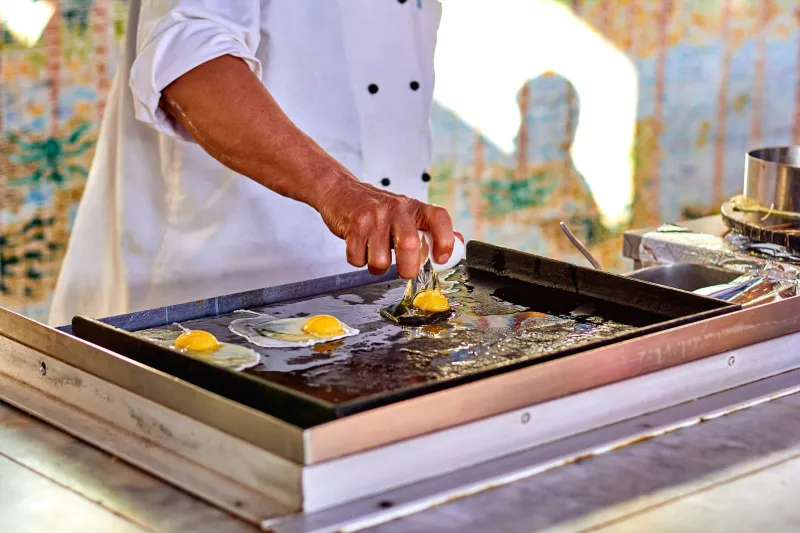
The ingredients dictate the adjustments. A delivery of uni may be transcendent on Tuesday and merely good on Thursday, and the chef who tastes everything before service rewrites the evening accordingly. This is where the parallel to teppanyaki becomes vivid. At the iron griddle, the improvisation is even more visible — the chef reads the sizzle of the steak, the give of a scallop under the spatula, the way the surface temperature shifts as courses progress. Nothing is timed by a clock. Everything is timed by attention.
And then there is you. The best omakase chefs watch their guests the way conductors watch an orchestra. A diner who lingers over the sashimi course may receive a slower rhythm. A guest who leans forward, curious, may be rewarded with something off-program — a cut, a condiment, a story. The meal is a conversation in which only one party speaks, but both are listening.
What the Counter Teaches Us
There is a temptation to romanticize all of this into a philosophy of submission, and that would be a mistake. Omakase is not about the diner becoming passive. It is about the diner becoming receptive. When you stop evaluating options, you start evaluating experience. Flavors arrive in sequences designed to build — bright to rich, delicate to substantial — and the palate follows an arc no à la carte order could replicate.
American diners are discovering something their customization instinct never offered them: the pleasure of being surprised by someone who knows them, or is learning to. Regulars at a good counter describe the chef remembering their preferences, steering the menu around them without ever being asked. That is not the absence of choice. That is choice, delegated to its most informed executor.
There is also an honesty to the format that deserves mention. At a fixed-menu counter, the chef cannot hide behind your selections. If the fish is tired, no amount of clever plating disguises it. Omakase concentrates accountability. The chef chose it; the chef stands behind it.
The Case for Letting Go
None of this means the menu is obsolete, or that every dinner should be a pilgrimage to a counter seat. But the rise of omakase in the United States signals an appetite — for seasonality, for craftsmanship, for the intimacy of watching a meal made in real time by hands that have made it ten thousand times before.
The next time you find yourself agonizing over a menu, consider the alternative that Japanese tradition has refined over generations. Say the phrase. Take the seat. Let the chef read the season, the ingredients, and you — and discover that the meal you didn't order may be the one you remember longest.