Noon at the Griddle: Why the Midday Iron Is America's Smartest Seat in Fine Dining
There is a persistent belief, quietly reinforced by every tasting-menu restaurant in America, that fine dining begins after six o'clock. The candlelight, the pacing, the ceremony — these, we are told, are evening pleasures, and we pay evening prices for them. At the teppanyaki counter, this belief deserves to be challenged. Walk into a serious griddle kitchen at noon on a Tuesday and you will find the same iron, the same knives, and frequently the same chef who will command three figures per head that night. Your check, however, will often read like an apology.
The Economics of the Midday Griddle
Teppanyaki is an unusually honest cuisine when it comes to cost. Much of what you pay for at dinner is time — the chef's time, stretched across a longer arc of courses, a longer evening, a fuller room. At lunch, the room is thinner and the pace quicker, but the craft is identical. The fish is cut from the same morning deliveries. The wagyu comes off the same slab. The rice, the pickles, the miso — unchanged.
What changes is the arithmetic. A dinner omakase at a respected American teppan counter routinely runs $150 to $250 before sake. The lunch set at many of these same kitchens — often four or five courses drawn directly from the evening sequence — lands between $35 and $70. No other fine dining genre in this country compresses its price gap so dramatically between services. The steakhouse next door does not offer you the dry-aged ribeye at noon for half price. The sushi bar rarely discounts its omakase. The teppan counter, by long custom in Japan and increasingly here, does.
A Shortlist Worth the Drive
A few standouts, by region, for the diner planning a pilgrimage:
- California: Los Angeles and the Bay Area host the country's deepest bench. Look for lunch sets in the $40s that include a course of A5 or near-A5 beef — an indulgence that would double the price after dark.
- New York: Midtown counters offer abbreviated lunch omakase that trim the dessert and one seafood course but keep the signature beef and the garlic rice, which is the course that matters anyway.
- Texas: Houston's Japanese enclaves deliver griddle lunches of startling generosity — protein, soup, rice, and pickles under $30 in several cases.
- Hawaii and the Pacific Northwest: Both regions benefit from proximity to fish, and their lunch services lean into it; the seafood courses here are the reason to come.
The pattern holds nationally: the lunch set is not a lesser menu. It is a shorter one.
What to Order — and What to Wait For
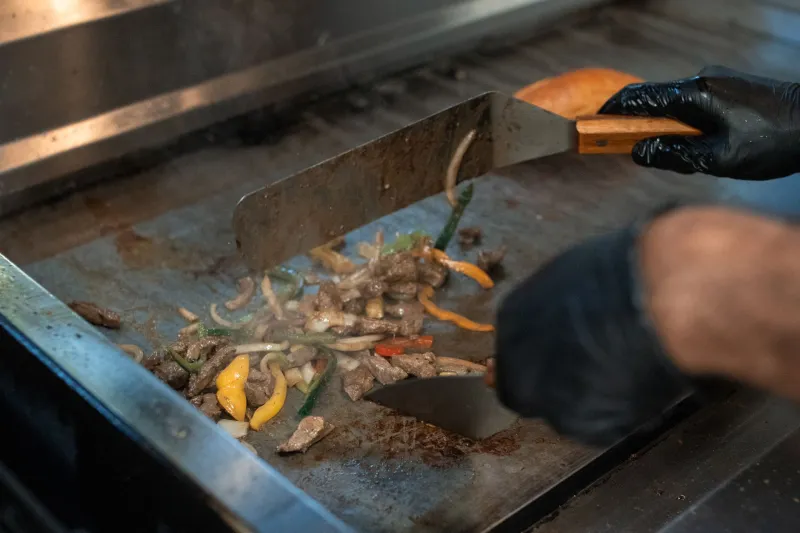
Order the beef at lunch. It is the course where the griddle's heat and the chef's timing show most clearly, and lunch sets tend to feature cuts identical to dinner service. Order the garlic rice, always; it is the teppan's signature and it costs the kitchen little, which is why it survives the discount.
Skip, or expect to miss, the longer cold appetizers and the elaborate desserts — these are where lunch menus economize, and their absence is no loss. If a lunch set offers a choice between a second seafood course and a larger beef portion, take the beef. The iron rewards richness.
The Newcomer's Argument
For the diner who has never sat at a teppan counter, lunch solves the two great anxieties of a first visit: cost and duration. A $60 lunch omakase is an experiment; a $220 dinner is a commitment. And a ninety-minute midday service teaches you everything the evening would — how to read the chef's hand, when the sear happens, why the counter falls silent before the first cut — without the pressure of a marathon.
There is, finally, a quieter pleasure at stake. The lunch counter is where regulars sit, where chefs talk more freely, where the room belongs to people who came for the food rather than the occasion. The evening service sells theater. The noon service sells lunch — extraordinary lunch, on a griddle that cost more than most cars, made by a chef who will charge you double for the same fire in eight hours.
That is not a compromise. That is the best seat in American fine dining, hiding in plain sight before two o'clock.