The New Anniversary Table: How Front-Row Iron Replaced the Candlelit Booth
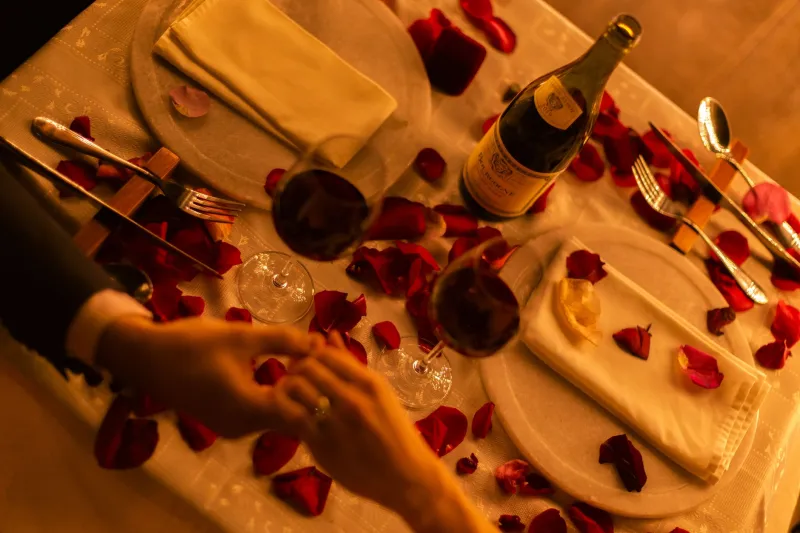
For half a century, the American special occasion had a fixed vocabulary: dim lighting, a deep booth, a server who appeared and vanished like a well-trained stagehand. Romance, we were told, required privacy. The ideal anniversary dinner was one in which the rest of the restaurant ceased to exist.
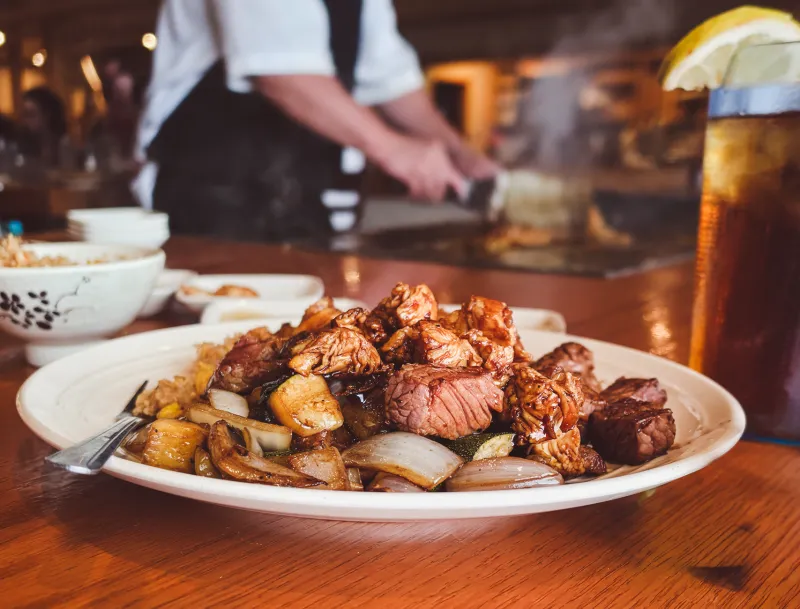
Younger diners are quietly rewriting that script. In cities from Austin to Chicago to Seattle, the teppanyaki counter — bright, loud, gloriously public — has become the reservation of choice for engagements, birthdays, and Friday nights alike. The couples are not hiding from the room. They are choosing it.
Spectacle as a Shared Language
The conventional critique of live-fire dining is that it is a distraction: how can two people converse over a wall of sizzle and flame? But watch a counter on a Saturday evening and you notice something the critique misses. The performance gives couples something to talk about that isn't the negotiation of their own lives.
There is a reason first dates gravitate toward aquariums and ballgames. Shared spectacle lowers the stakes of conversation. At the teppan, the griddle does the icebreaking. A perfect onion rose, a sear that crackles three feet into the air — these are gifts the room gives to the table, and every gift is a topic neither person had to invent.
Intimacy, Redistributed
I would argue something more provocative: the counter doesn't diminish intimacy; it redistributes it. The old model of romance asked two people to generate an entire atmosphere from nothing, alone in a dark corner. That is a heavy ask, and plenty of dinners have buckled under it.
The teppan model outsources atmosphere to the chef and keeps the couple's energy for each other. And there is a subtle trust in dining side by side rather than across from one another — facing the same direction, watching the same fire. It is the posture of companions, not interrogators.
The Privacy We Actually Want
Skeptics will say this is just another form of the experience economy, dining as content, the meal staged for the phone in your pocket. Fair enough — some of it is. But the impulse underneath runs deeper than Instagram.
American social life has grown lonelier even as it has grown more connected, and the special occasion dinner has become one of the last rituals where strangers share a room on purpose. Sitting at a counter beside other couples celebrating their own milestones is not an invasion of privacy. It is a reminder that joy is ordinary, that other people are also marking time, also toasting something. The dark booth promised escape from the world. The iron counter offers membership in it.
Not for Every Night — and That's the Point
None of this means the candlelit booth is dead. There are evenings that call for murmur and shadow, and fine dining will keep serving them well. But the teppanyaki counter has staked a legitimate claim on the celebratory meal, and it did so by refusing the old bargain that romance equals seclusion.
The couples booking these seats aren't choosing theater over connection. They're choosing a room where the fire is real, the chef is three feet away, and the person across from you — beside you — doesn't have to carry the evening alone. That's not a lesser intimacy. For a generation raised in public, it might be the truest kind we have.