Beyond the Onion Volcano: Unlearning Sixty Years of Teppan Theater
Let me say something that will be unpopular in certain dining rooms across this country: the onion volcano has done more to obscure teppanyaki than to explain it.
This is not an attack on nostalgia. For many Americans of a certain generation, a birthday dinner at a hibachi chain was a formative culinary event — the first time they watched a chef cook in front of them, the first time dinner came with a plot. I understand the affection. But sixty years after that format arrived on American shores, it is worth asking what it taught us, and what it left out.
The Chain That Wrote the Script
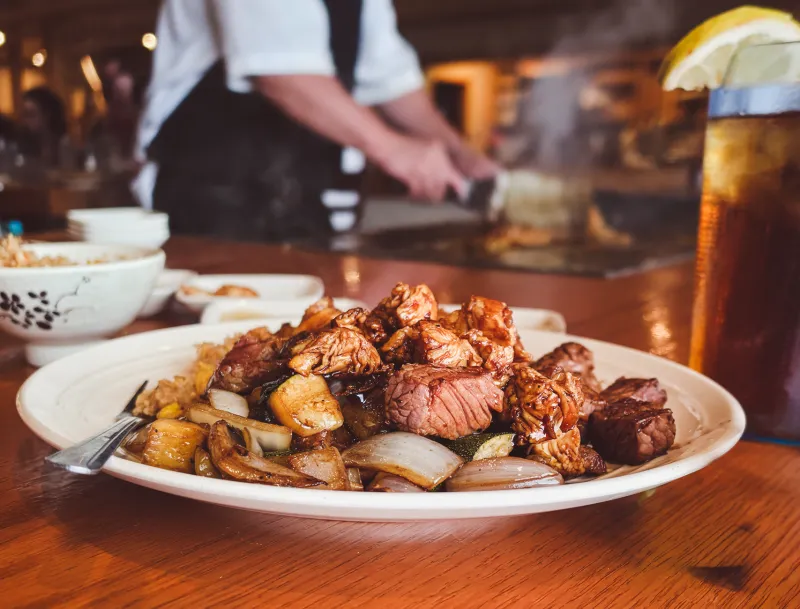
When Benihana opened in New York in 1964, it was solving a problem. Japanese cuisine was unfamiliar to most Americans; raw fish was a hard sell; and the average diner had never seen a chef work within arm's reach. The solution was brilliant, commercially speaking: turn the meal into a show. Make the chef a performer. Give the food a soundtrack of clanging spatulas and a finale you could photograph.
It worked, and it worked for decades. But the show came at a cost. The theatrical version of teppanyaki taught Americans that the griddle is a stage — that the point of standing before hot steel is spectacle, not subtlety. The egg, spun through the air. The rice, shaped into a laughing face. The zucchini, sliced into a volcano and set alight.
None of this is Japanese tradition. It is American show business wearing a Japanese costume. And the trouble is that many diners walk into a high-end teppan counter carrying exactly these expectations, and then don't know what to do with what they find.
What the Quiet Counter Is Actually Doing
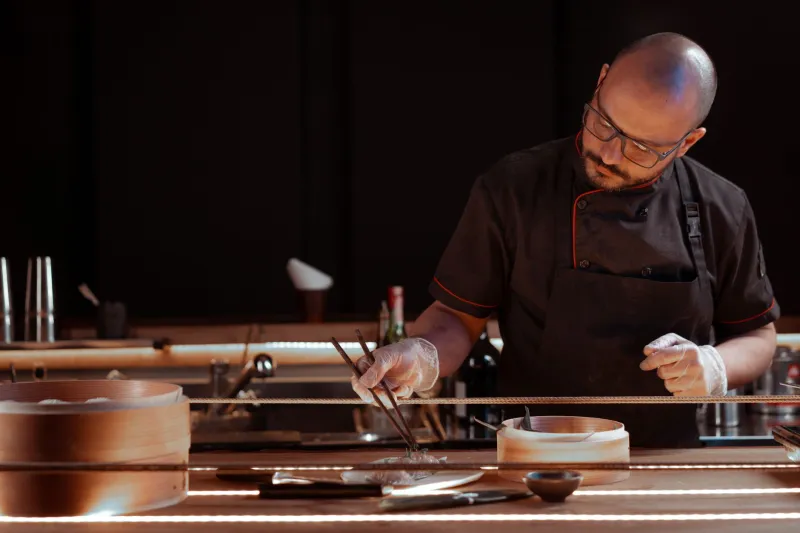
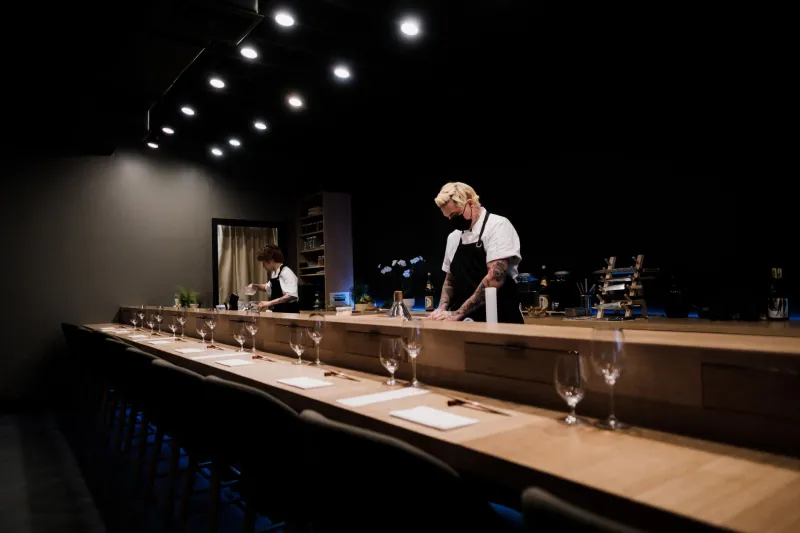
At an omakase teppan counter — the kind flourishing now in New York, Los Angeles, and Chicago — the chef is not performing for you. The chef is performing for the food, and you have been granted a seat close enough to watch.
The difference is everything.
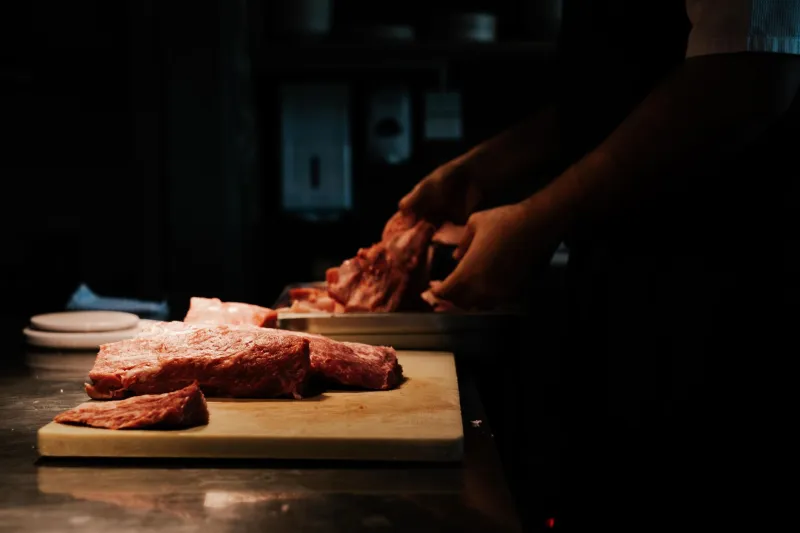
Watch a serious teppan chef and you will see almost no wasted motion. The spatula is used less like a prop and more like a scalpel. Portions of A5 wagyu are pressed, released, and turned at intervals measured in seconds. A piece of abalone may spend ten minutes on the steel and receive, in that time, perhaps four deliberate gestures. The most impressive thing on display is restraint.
The seasoning happens in millimeters. The resting happens in silence. When the chef hands you the beef, it is because the beef is ready — not because the beat in the show calls for it.
A Field Guide for the First-Time Guest
If your only reference point is the hibachi show, here is what to watch for instead:
The wipe. A serious chef cleans the griddle between courses with near-ritual care. A contaminated surface ruins delicate fish and aged beef alike. The wipe is a statement of intent.
The sound. Listen for the change when each protein hits the iron. Dry, fierce, and brief for a sear; low and steady for rendering fat. The griddle is speaking the whole time.
The hands. Count how often the chef touches the food. At a great counter, the answer is: less than you think. Every contact is a decision.
The order. Nothing arrives by accident. Light before rich, fish before meat, and a deliberate pause between movements. This is omakase thinking applied to steel — trust the sequence.
Two Traditions Can Coexist
None of this requires abandoning the birthday dinner of one's youth. The theatrical chain and the omakase counter are, at this point, two different American dining experiences that happen to share a piece of equipment. There is room for both.
But precision deserves its audience, and right now that audience is smaller than it should be — largely because so many diners were taught that teppanyaki is the theater. The chefs working quietly behind eight seats in a Manhattan basement or on a second floor in Culver City are doing some of the most technically exacting cooking in this country, on equipment most kitchens would misuse.
The volcano will keep erupting, and that's fine. Just know that elsewhere, on a quieter stretch of steel, something more interesting is being served.