The Geometry of Being Seen: Why the Teppan Counter Puts You Across from the Chef, Not Behind Him
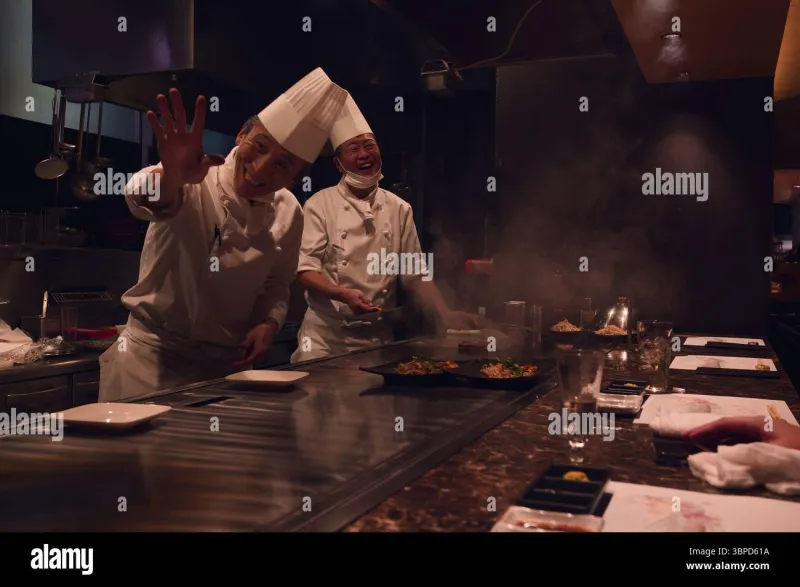
Photo: teppanyaki chef facing diners across iron griddle counter, via c8.alamy.com
There is a particular moment at a fine-dining chef's counter in America — at the sushi bar in midtown Manhattan, at the tasting counter in a converted San Francisco warehouse — when the diner realizes the arrangement of the room. You sit at the rail. The cook stands beyond it, back partially turned, hands moving over a cutting board you can see only at an angle. You are an audience. The kitchen is a stage. And the most prized seat in the house, the chef's table, offers a view of the stove: a window into the work, framed like a diorama.
Teppanyaki arranges the room differently, and the difference is everything.
The Flatiron Flips the Room
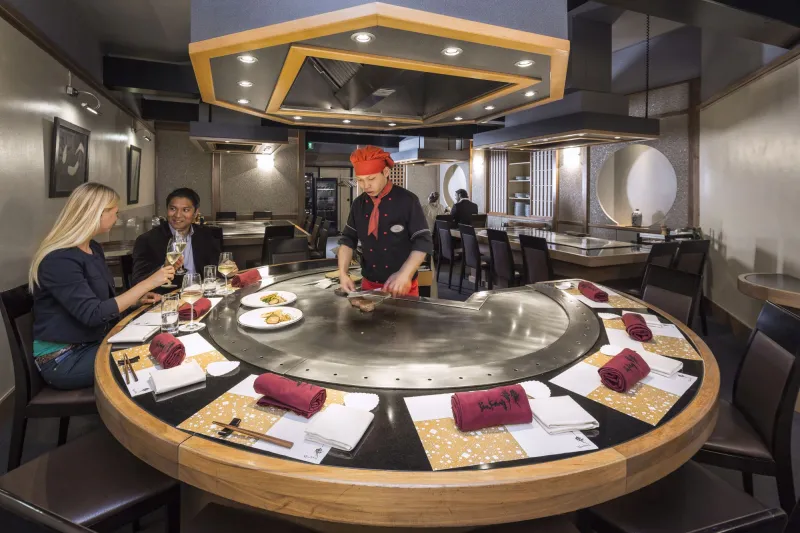
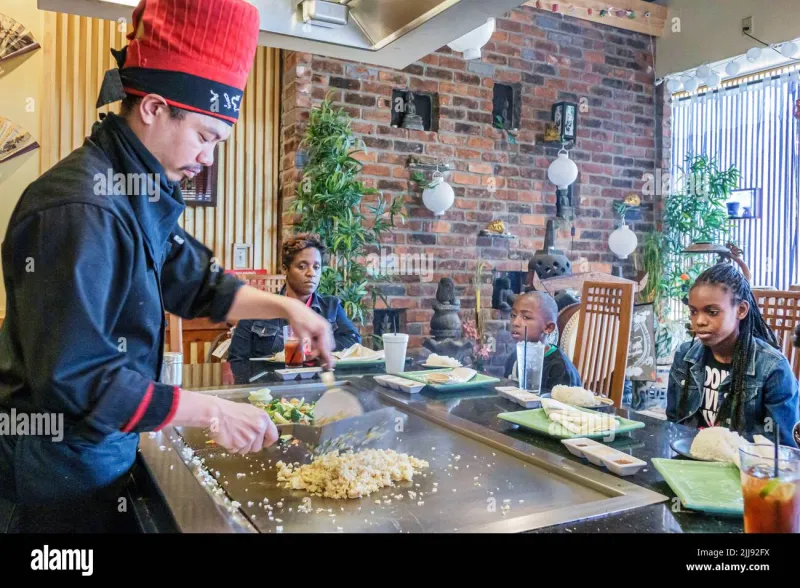
At a teppan counter, the griddle is not a backdrop. It is a table shared by two parties. The chef stands on one side; the diners sit on the other, close enough to feel the radiant warmth of the steel and to be asked, directly, whether the wagyu should lean rarer. There is no angle to crane for, no glass partition, no plate passed through a window. The meal happens between people, on a surface both can see plainly.
This is not a small matter of furniture. It is a philosophy of hospitality expressed in geometry.
The Western chef's table, for all its pleasures, preserves a boundary. It invites the diner into the kitchen's confidence while keeping the cook oriented toward the work. The teppan counter dissolves that boundary entirely. The chef cannot hide behind the task. Every glance, every pause, every small adjustment of heat happens in full view of the person it is for.
Eye Contact as a Course
Consider what this makes possible. When a chef at a traditional counter finishes a course, the plate travels outward and the moment of judgment happens at a distance — the diner reacts, but the cook may never know. At the teppan, the exchange is immediate. You taste the seared scallop; the chef watches your face; you say something or say nothing, and either way the message lands. The next course can bend toward you. The salt can be tempered. The pacing can slow because your conversation has deepened.
This is why regulars at a good teppan counter describe the experience less like dining out and more like being hosted. The chef is not performing for a room. He is attending to you, one of a handful of guests, in real time, with his eyes up.
There is a wordless trust in that arrangement. The diner surrenders the menu and, in exchange, receives attention that is genuinely individual. American diners, raised on the transactional rhythms of the neighborhood bistro, often take a course or two to adjust. Then something shifts. The meal stops feeling like a service being rendered and starts feeling like a conversation being had.
Performance, But For an Audience of Few
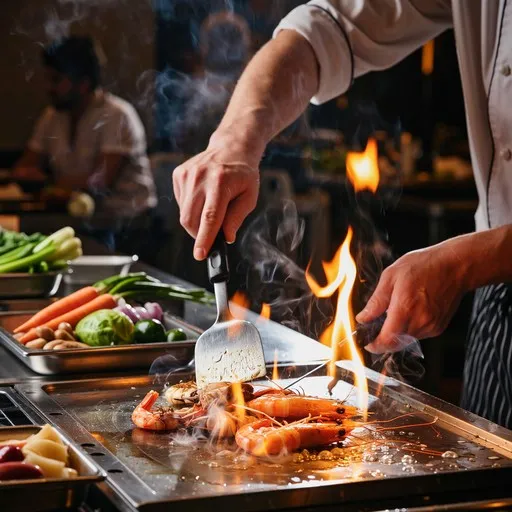
Critics of teppanyaki sometimes reduce it to theater — the flashing spatulas, the onion volcano, the egg rolled and caught. And it is true that the form can slide into spectacle. But the deepest tradition behind the counter is not performance. It is omakase: the decision to place yourself in the chef's hands.
Performance, by definition, survives the absence of any single spectator. Hospitality does not. The teppan chef is not putting on a show; he is reading a table of four, adjusting to the anniversary couple from Chicago, the solo diner at the corner seat, the curious first-timers. The same ingredients become, course by course, four slightly different meals.
That is the luxury the geometry buys. Not rarity, not expense — though teppan omakase in Los Angeles or New York can command both — but the rare condition of being cooked for, directly, by someone who can see you.
What the Chef's Table Cannot Give
I have sat at celebrated chef's tables from Portland to Providence, and I do not dismiss them. Watching a brigade at work is genuinely thrilling; the kitchen is a beautiful machine. But the chef's table is fundamentally about access to the kitchen. The teppan counter is about access to the cook.
One shows you the work. The other shows you the person.
For a culture increasingly fluent in food — its provenance, its technique, its story — this may be the next thing American diners learn to want. Not a window into the kitchen, but a seat across the fire. Not dinner as spectacle, but dinner as encounter.
The iron, flat and honest, makes no argument of its own. It simply holds the space between two people and stays hot. What happens across it — the eye contact, the questions, the small course that arrives exactly the way you hoped — is the oldest kind of luxury there is: being seen, and fed accordingly.