Flat Iron at Home: Building a Domestic Teppan Without the Theater
Photo: Dafannin, CC BY-SA 4.0, via Wikimedia Commons
There is a moment at a serious teppanyaki counter — not the flame-throwing kind, the quiet kind — when the chef lays a single scallop on the iron and does nothing at all for thirty seconds. No motion, no flourish. The griddle is doing the work. The heat is even, the surface is neutral, and the cook is merely a witness with a spatula.
Home cooks who fall in love with that dinner often go straight to their cast iron skillet, assuming heft equals iron. It does not. The skillet and the teppan are different instruments, and understanding why is the first step toward a credible home version.
Why the Skillet Fails the Test
A cast iron skillet is a bowl of stored heat. Its walls rise, its floor is small, and its temperature swings dramatically from center to rim. For searing a steak, that gradient is a gift. For teppanyaki, it is a defect.
A teppan is defined by three things a skillet cannot offer:
- A broad, flat plane. Ingredients sit in zones — protein here, vegetables there — and finish simultaneously. A skillet forces sequencing; a griddle allows orchestration.
- Thermal evenness. Thick steel or iron plate spreads heat laterally, so a scallop at the edge cooks like one at the center.
- A low, open profile. The chef works from above and beside, not from within a wall. Steam escapes. Surfaces sear rather than stew.
There is also the matter of seasoning. Skillet cooks prize a polymerized, nonstick black patina. A working teppan is closer to neutral — scrubbed, lightly oiled, and allowed to develop only the faintest sheen. Heavy seasoning on a flat surface burns and turns acrid at teppan temperatures, which run hotter than most stovetop skillet work: 450°F and above for proteins, with the oil applied to the food, never flooding the plate.
What to Buy Instead
You do not need a 400-pound slab of restaurant steel. You need flatness, mass, and a stovetop that can feed it.
The carbon steel griddle plate. A quarter-inch-thick carbon steel plate, roughly 12 by 16 inches, is the honest domestic teppan. Brands like Lodge and Made In sell flat griddles; Japanese makers offer two-plate teppan designed for the yakiniku home market. Season it lightly, exactly once, then maintain it like a teppan — hot, scraped, wiped.
The induction caveat. Induction delivers ferocious wattage but concentrates it in coils. On glass-top induction, use the thickest plate you can find and preheat a full ten minutes at medium-high. Gas remains the more forgiving partner; electric coil is workable with patience.
Two tools worth owning. A long-handled stainless scraper (the teppan chef's true instrument) and a pair of tekkō-style steel spatulas with no rubber grips. Everything else — squeeze bottle for neutral oil, fine salt, a damp towel for wiping between courses — is already in your kitchen.
The Discipline of Heat and Oil
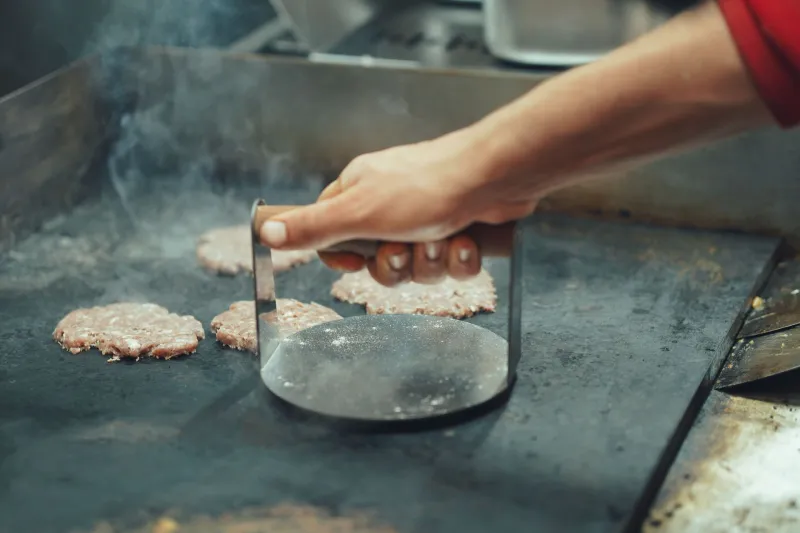
Watch a counter chef and you will notice the oil is rationed like a currency. A thin stream goes onto the food or onto a single spot on the iron, then the surface is wiped. Between courses, the chef scrubs the plate with the scraper and a wet cloth, restoring a clean slate. This is not fussiness; it is flavor management. Burnt fond from the mushrooms has no business under the flounder.
At home, adopt three rules. Preheat longer than feels reasonable — teppan cooking is mostly preheating. Oil the ingredient, not the whole surface. And clean the plate hot, with the scraper, before the next course begins.
A Three-Course Home Omakase
Set your griddle over the largest burner, preheat fifteen minutes, and stage ingredients on a sheet pan like a mise at a counter. Cook and serve course by course; guests eat while you work.
First course — scallop with yuzu salt. Pat dry, oil lightly, sear one side undisturbed for 90 seconds on a 450°F plate. Flip, thirty seconds more. Finish with flaky salt and a whisper of yuzu zest.
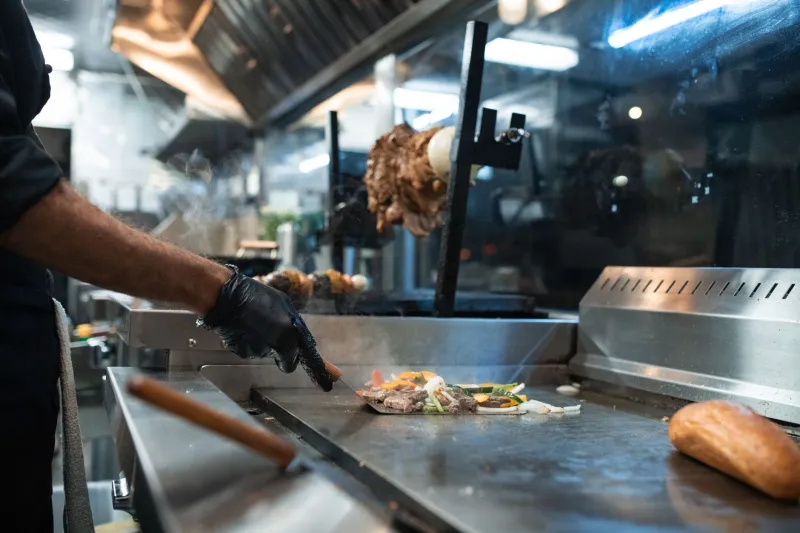
Second course — zucchini, shiitake, and onion, in that order. Vegetables on a teppan are a lesson in sequencing: firmest first, onion last for its sweetness and its moisture. Cut everything in even batons, oil the food, and keep it moving in zones.
Third course — ribeye, sliced on the iron. A one-inch steak, seared hard on both faces, then moved to the coolest zone to rest. Slice it into strips right on the plate with the scraper, let the pieces kiss the iron for five seconds each, and serve with grated daikon and ponzu.
Rice, miso soup, and a cold lager complete the table. No onion volcano required — the fire, quietly managed, speaks for itself.