The Regular's Portion: Earning the Off-Menu Course Without Asking for It
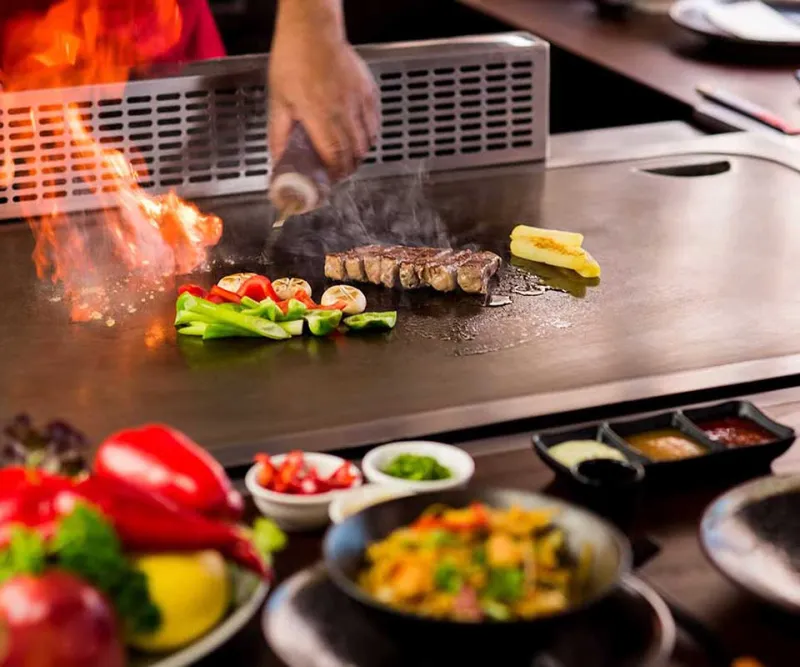
Photo: teppanyaki chef serving off-menu course to regular guest at counter, via i.pinimg.com
The Menu Is a Floor, Not a Ceiling
A printed menu at a serious teppan counter is a promise, not a boundary. It tells the first-time guest what to expect: a sequence, a price, a style of service. But the regulars know that the most interesting eating often happens just outside that document. A chef may set aside a cut that did not appear on the evening's sheet. A seasonal vegetable may arrive for a few weeks and never be printed. A small improvisation—an extra course, a different garnish, a piece of fish cooked a little longer because the chef knows how you like it—can turn a familiar dinner into something quietly personal.
This is not a conspiracy. It is the natural result of a relationship. Teppanyaki is a counter format, and the counter rewards familiarity. The chef sees the same faces, learns the same preferences, and begins to cook with those preferences in mind. The off-menu course is not a secret handshake. It is a conversation that has been going on long enough to develop shorthand.
What Repetition Actually Buys
Regulars often misunderstand what their loyalty purchases. It is not access to a hidden list. It is context. A chef who has cooked for you six times knows whether you prefer your steak closer to medium than medium-rare, whether you eat shellfish, whether you have a sweet tooth, whether you are likely to order a second glass of sake. That context allows the chef to make better decisions. The off-menu course is simply a decision that has been tailored to you.
Repetition also builds trust in the other direction. The chef learns that you are not chasing novelty for its own sake, that you are willing to eat what the season offers, that you will not complain if a course is unfamiliar. That is the real currency. A guest who asks for the off-menu experience on a first visit is asking for a relationship without having built one. A guest who returns, eats well, and lets the chef lead is offering the chef something more valuable: consistency.
The Chef's Read of the Room
Teppanyaki chefs are unusually well positioned to read a room. They stand at the center of the counter, facing the guests, working with their hands while watching with their attention. They notice who is celebrating, who is distracted, who is eating quickly, who is lingering. That read informs the off-menu decision. A chef may add a small course for a table that seems especially engaged. A chef may hold back a luxury ingredient for a guest who will appreciate it rather than simply consume it.
This is not favoritism in the crude sense. It is hospitality. The chef is allocating attention and ingredients according to a set of signals that regulars learn to send without speaking. The signal is rarely a request. It is a pattern of behavior: arriving on time, ordering thoughtfully, eating with curiosity, thanking the staff, not treating the counter as a stage for personal performance. The off-menu course is the chef's reply.
Etiquette of the Unprinted Course
The etiquette of the off-menu course begins with not asking for it. This is the first rule because it is the one most often broken. A guest who asks what is off-menu puts the chef in an awkward position. The chef must either refuse, which feels ungenerous, or produce something, which turns a gift into a transaction. The better approach is to make yourself the kind of guest to whom a chef might offer something. That means eating what is put in front of you, asking questions without demanding answers, and respecting the pace of the meal.
The second rule is not to compare. The off-menu course is not a prize for spending the most money or visiting the most often. It is a response to a particular relationship. A regular who announces that another guest received a different course is turning hospitality into scorekeeping. The chef's read of the room is not a public ledger. It is a private judgment, and it depends on trust.
The third rule is to receive the gift gracefully. If a chef offers a small extra course, the correct response is not to ask what it cost or whether it is on the menu. The correct response is to eat it, enjoy it, and thank the chef without making the moment larger than it needs to be. The off-menu course is a quiet thing. It should stay quiet.
When Privilege Turns to Entitlement
There is a version of the regular's experience that sours. It happens when a guest begins to treat the off-menu course as a right rather than a courtesy. The signs are recognizable: requests for specific ingredients that are not in season, complaints when the improvisation does not appear, a sense that the chef owes something beyond the printed menu. This is the point at which loyalty becomes entitlement, and it is usually the point at which the chef stops improvising.
Teppanyaki chefs are generous, but they are not unlimited. The counter is a small stage, and the chef's attention is finite. A regular who understands this earns more than a better dinner. They earn a place in the chef's rhythm. They become part of the room the chef is reading, not an exception to it. That is a more valuable thing than any off-menu course.
The Quiet Contract
The best regulars at a teppan counter understand that the off-menu experience is not a secret menu. It is a quiet contract. The guest brings consistency, curiosity, and respect. The chef brings attention, seasonality, and the occasional improvisation. Neither side announces the terms. Both sides honor them.
In a restaurant culture that often rewards the loudest request, the teppan counter remains a place where the best things are offered rather than ordered. That is not a flaw in the format. It is one of its quietest pleasures. The regular who learns to wait for the unprinted course is learning something larger about hospitality: that the best seat at the counter is not the one with the most access. It is the one with the most trust.