What to Pour When the Chef Is Three Feet Away: A Teppan Pairing Primer
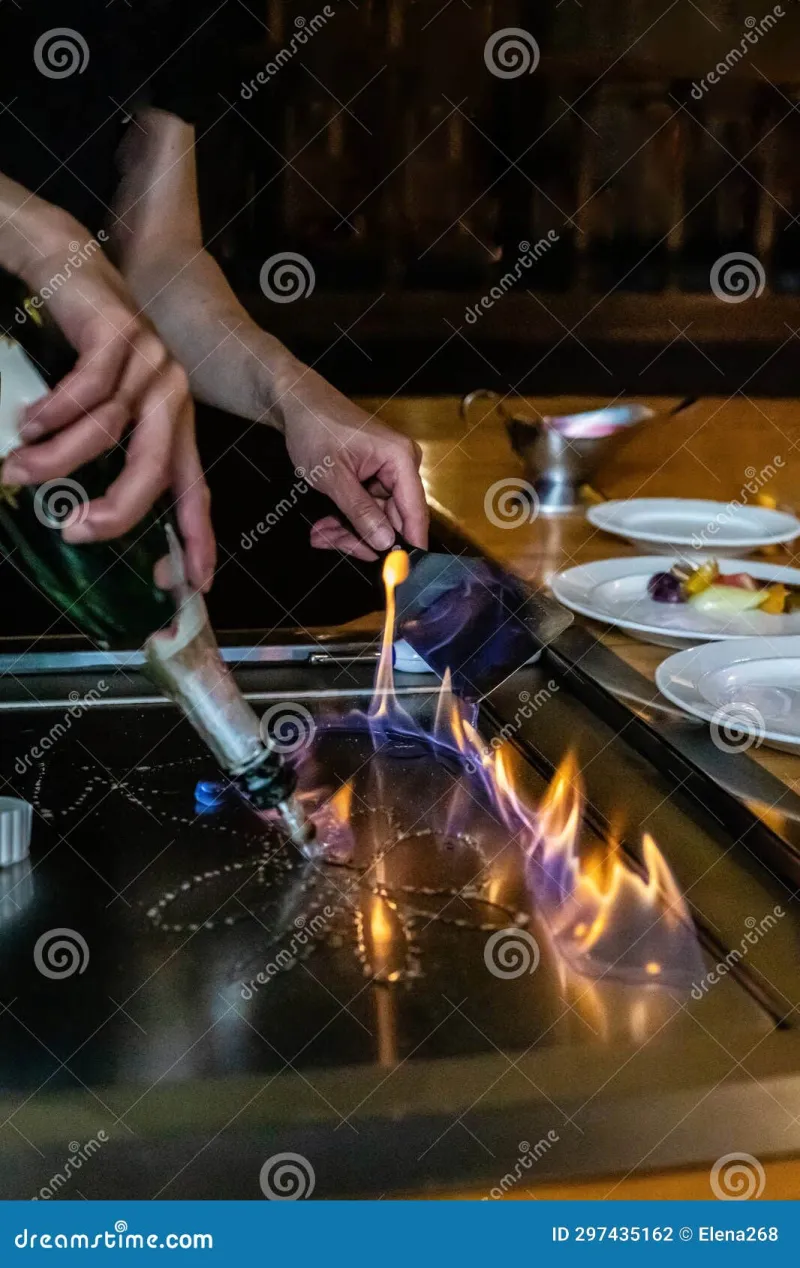
Pairing for teppanyaki is unlike pairing for any other format, and the reason is sitting right in front of you: the griddle. When your dinner is cooked at high heat a few feet away, the aromatics of the cooking itself — seared fat, caramelized alliums, a whisper of smoke — become a seasoning for everything in the glass. Wines that shine in a quiet dining room can taste flat or flinching at the teppan counter.
Why High Heat Demands High Acidity
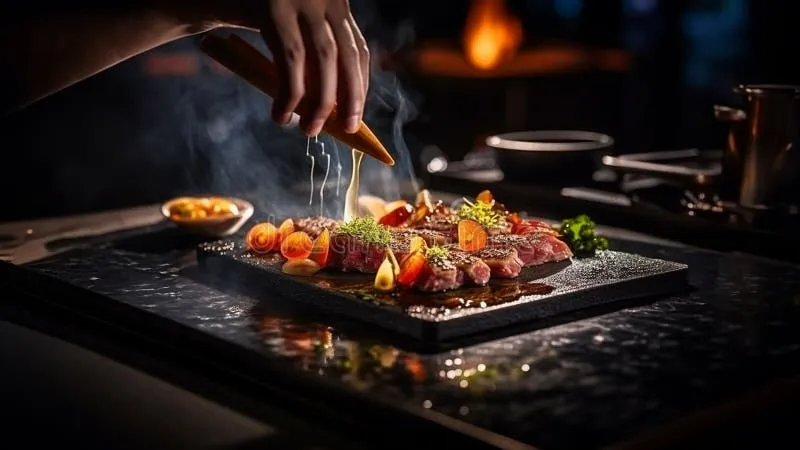
The dominant flavors at a teppanyaki counter are browning and fat. Maillard crust, rendered wagyu marbling, butter-basted seafood — these coat the palate. The beverage that refreshes against that richness is one with cut: acidity, salinity, or both. This is why sommeliers steer teppan diners away from big oaky Chardonnays and toward leaner, brighter bottles.
Cold sake deserves special mention. Served chilled (never hot — heat flattens the aromatic rice notes), premium junmai and ginjo sake have a clean, almost mineral drive that resets the palate between seared courses. And there is a cultural logic to it: in Japan, the highball — whiskey and soda, brutally simple — is the unofficial drink of the grill. Its carbonation and low proof make it arguably the most food-friendly pour at any counter where fat is the headline.
The Five-Course Pairing List
1. Appetizer (often a light soup or seasonal small bite): Start with a Grüner Veltliner from Austria. Its white-pepper edge echoes the griddle's smoke, and its acidity wakes up the palate without overwhelming a delicate opening course. A dry, citrus-driven sake from Niigata works equally well.
2. Seafood course (scallop, lobster, or prawn on the iron): Here, texture matters more than weight. Try a Chablis or a cool-climate Albariño — saline, unwooded, and precise. If the chef finishes the seafood with a citrus butter, a junmai ginjo sake with a pronounced aroma lift will mirror it beautifully.
3. Wagyu or premium beef: This is the course where tannin earns its keep. A Napa Cabernet Sauvignon with fine-grained tannins stands up to marbled beef, but consider the counterintuitive move: a chilled Gamay or a Burgundy-level Pinot Noir, whose acidity slices through fat rather than wrestling it. For sake drinkers, a yamahai junmai — earthy, savory, slightly wild — is the match of the night.
4. Rice or noodle course (often garlic fried rice): Garlic is the great pairing disruptor. A Spanish Albariño or an off-dry Riesling handles it gracefully; so does, honestly, another highball. If the restaurant pours an aged sake, this is the moment — its nutty depth plays against toasted rice.
5. Dessert (yuzu sorbet, matcha, or fruit): Look toward late-harvest or ice wine in small pours, or a Japanese umeshu (plum wine) served over ice. Sparkling rosé is the safe, elegant universal answer.
Barrel-Aged Cocktails and the American Contribution
One genuinely American development worth embracing: barrel-aged cocktails. A barrel-aged Negroni or Old Fashioned, with its softened edges and faint wood-smoke character, pairs naturally with griddle cooking — the drink's oak notes converse with the sear rather than competing with the plate. Several US teppan counters now age their house Manhattans in-house; it is a tradition only a few years old, and it suits the iron perfectly.
A Final Rule of Thumb
When in doubt, follow the smoke. Whatever you order, ask yourself whether it refreshes or加重s — and if your server or the restaurant's sommelier offers a pairing flight, take it. A good teppan chef sequences fat, acid, and aromatics across the omakase; the right glass is simply the last ingredient in the sequence, chosen to keep the whole performance in tune.